
10Gb PCIe Network Card VunLink 10GbE RJ45 Ethernet Card with Realtek RTL8127AT
4.3Editor score
Realtek RTL8127AT chipset
PCIe 4.0 x1 interface
Multi-gig auto negotiation
This guide compares the top 10GbE network cards for PCs to help you choose the best adapter for speed compatibility and value in October 2026.
Finding the right 10GbE network card for PC can significantly boost your internet speed and local data transfer rates. Modern workflows often demand more than standard Gigabit connections provide.
We evaluated ten leading adapters based on chipset performance compatibility features and user feedback. Our selection includes options from established brands and value-focused manufacturers.
Each pick highlights specific strengths like multi-gig support low latency or dual ports. Prices and availability change frequently so check current listings before purchasing your new card.
4.3Editor score

4.3Editor score

4.4Editor score
The following table provides a side-by-side view of key specifications for all ten adapters analyzed in this guide to help you make an informed decision.



The Vogzone X550-T2 stands out as a top performer for users needing robust 10GbE connectivity. It features dual RJ45 ports and is built around the reliable Intel X550AT2 controller. This adapter receives high marks for stability and speed in demanding environments.
We may earn a commission when you buy through this link, at no additional cost to you.
Its dual ports allow for link aggregation or failover setups which enhance reliability. The on-chip QoS and traffic management ensure smooth data flow. Firmware updates can be performed remotely which reduces downtime significantly.
While powerful this card costs more than single port alternatives. It also requires a PCIe 3.0 x4 slot which might not fit smaller motherboards. However the performance benefits justify the cost for professional setups.
This card is ideal for homelab enthusiasts small office servers or workstations handling large data transfers. If you need enterprise grade features on a desktop the X550-T2 delivers exceptional value.
Two RJ45 ports provide redundancy and allow you to combine bandwidth for faster transfers without extra switches.
In-system NVM updates mean you can refresh card firmware directly from Windows or Linux without rebooting.
We may earn a commission when you buy through this link, at no additional cost to you.
The VunLink 10GbE card offers incredible value for users seeking 10G speeds without breaking the bank. Powered by the Realtek RTL8127AT it delivers reliable performance for NAS and desktop upgrades. It is a favorite among budget conscious builders.
We may earn a commission when you buy through this link, at no additional cost to you.
Its PCIe 4.0 x1 interface saves slots while maintaining full speed. The card supports auto negotiation across multiple speeds including 2.5G and 5G. This flexibility makes it easy to integrate into existing network infrastructures.
The main trade off is having only one Ethernet port. Users needing multiple connections must install additional cards. Driver installation is required on some systems but the process is straightforward.
This adapter is perfect for home labs NAS builds or gaming PCs needing a single 10G link. If you want high speed networking at the lowest cost the VunLink is a solid choice.
Using a single x1 slot leaves room for other expansion cards like GPUs or capture devices.
Works seamlessly with 5G and 2.5G routers so you can upgrade your network gradually.
We may earn a commission when you buy through this link, at no additional cost to you.
Intel X540T2 remains a benchmark for reliability in 10GbE networking. It brings dual ports and a single chip design to the table offering simplified integration for servers. This card is a legacy favorite among IT professionals.
We may earn a commission when you buy through this link, at no additional cost to you.
Its low power design and proven track record make it suitable for 24 7 operation. The single chip solution reduces complexity and heat generation. It also supports unified networking features like FCoE and iSCSI.
While the X540T2 is excellent it is an older design compared to newer chipsets. It may lack some modern features like advanced offloading found in 2026 options. Yet for stability it is hard to beat.
Choose this card if you prioritize reliability and dual ports for a server environment. It is a great fit for workstations that need consistent high speed connections without frequent upgrades.
Handles LAN iSCSI and FCoE traffic over one card simplifying cable management and hardware costs.
Designed for low power consumption it helps keep energy costs down during long runs.
We may earn a commission when you buy through this link, at no additional cost to you.
The TP-Link TX401 is a straightforward solution for adding 10G speeds to a PC. It includes a high quality CAT6A cable to ensure you get full performance out of the box. Many users appreciate the plug and play experience.
We may earn a commission when you buy through this link, at no additional cost to you.
QoS technology helps prioritize gaming traffic reducing lag during online sessions. The card comes with both standard and low-profile brackets for flexible installation. Driver support covers most modern Windows and Linux systems.
It lacks dual ports or advanced virtualization features found in higher end models. For simple home or small office upgrades it is sufficient. However heavy users might need more flexibility.
This card is a great starting point for anyone wanting to upgrade from Gigabit. If you value convenience and a complete kit the TX401 delivers exactly that.
Receiving a certified 10G cable ensures your cable won't bottleneck your new fast adapter.
QoS prioritization keeps your game packets moving first even when downloads run in background.
We may earn a commission when you buy through this link, at no additional cost to you.
TRENDnet delivers a dependable adapter with the TEG-10GECTX. It stands out with NDAA and TAA compliance making it suitable for government projects. The three year warranty adds peace of mind for business users.
We may earn a commission when you buy through this link, at no additional cost to you.
Performance is stable across typical desktop workloads. The PCIe 3.0 x4 interface ensures ample bandwidth for full 10G speeds. LED indicators help monitor link status quickly during troubleshooting.
The main drawback is the price compared to similar single port cards. It also does not offer extra multi-gig negotiation on top of 10G. Still it is a reliable choice for compliant setups.
Select this card if you need a trusted brand with strong support. It fits well in office environments where compliance and warranty coverage matter most.
NDAA TAA compliance allows use in regulated environments where standard cards might not qualify.
Three years of protection covers potential defects reducing long-term risk for your purchase.
We may earn a commission when you buy through this link, at no additional cost to you.
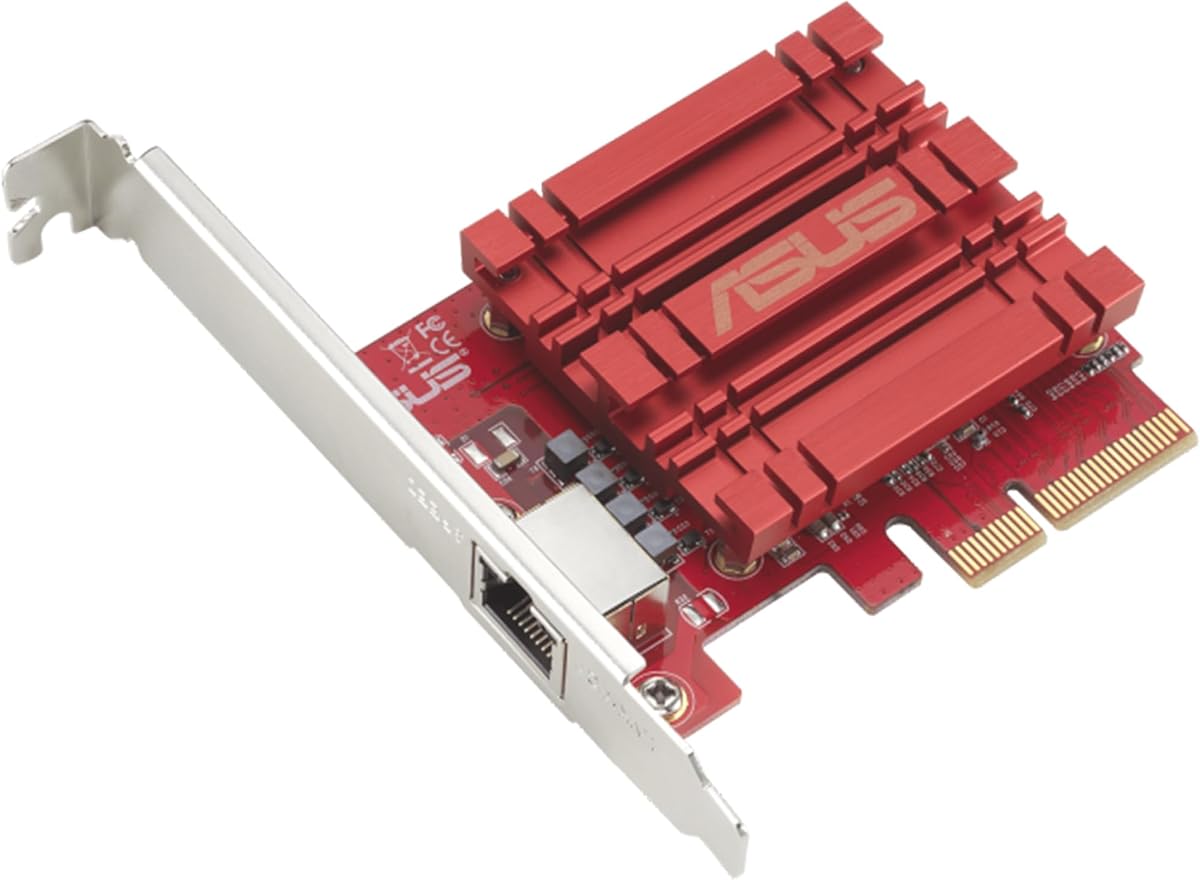
Asus NADACA0140 provides a straightforward path to 10G networking for desktop PCs. It offers robust support for Linux kernel versions which appeals to open source users. The card ensures seamless backward compatibility with older networks.
We may earn a commission when you buy through this link, at no additional cost to you.
Built-in QoS technology helps manage traffic priority for smoother online experiences. Users report consistent speeds without drops under typical load. It is a simple yet effective adapter for general use.
It lacks advanced features like dual ports or multi-gig negotiation beyond 10G. For basic needs it is excellent but power users may find it limiting. Installation remains uncomplicated for most systems.
This card suits users upgrading a Linux desktop or general workstation. If you value Linux compatibility and reliability over extra features it is a good match.
Broad kernel support means fewer driver headaches for Linux admins and hobbyists.
Prioritize data packets to keep critical tasks like video calls running smoothly.
We may earn a commission when you buy through this link, at no additional cost to you.
YuanLey offers a feature rich 10G card with strong customer backing. The RTL8127AT controller ensures stable high-speed networking for various tasks. Lifetime support adds value for those who want long-term help.
We may earn a commission when you buy through this link, at no additional cost to you.
Wake-on-LAN allows remote power management which is great for home labs. It works with many existing cables like Cat5e or Cat6 saving upgrade costs. The PCIe 4.0 x1 design fits most slots.
The main limitation is having just one port. The brand is less known than giants like Intel or TP-Link but quality is solid. Support quality often compensates for lower brand recognition.
This card is excellent for enthusiasts who want support and features without high cost. If you need remote wake features it is a smart pick.
Power up your PC remotely via network to access files or perform tasks.
Works with existing Cat5e to Cat7 cables so you don't need to rewire.
We may earn a commission when you buy through this link, at no additional cost to you.
WAVLINK provides a sturdy 10G adapter with excellent build quality. Metal shielding minimizes interference ensuring stable signal transmission. The card supports multiple PCIe slot types for broad motherboard compatibility.
We may earn a commission when you buy through this link, at no additional cost to you.
Users note that driver install requires care as antivirus software may flag it falsely. The manufacturer provides clear instructions to resolve this. Low profile brackets ensure it fits small form factor cases.
It does not offer extra virtualization features beyond standard networking. The price is competitive for what is offered. Performance is reliable for home and light professional use.
This adapter is ideal for users needing physical durability and flexible slots. It works well for compact PCs or builds where space is tight.
Heavy metal casing reduces electromagnetic noise for better signal stability.
Fits x4 x8 and x16 slots so you can use any available PCIe lane.
We may earn a commission when you buy through this link, at no additional cost to you.
NICGIGA leverages the proven Intel X540-T1 for stable 10G performance. It is well supported on VMware ESX which benefits virtualized servers. Users report consistent speeds and reliability.
We may earn a commission when you buy through this link, at no additional cost to you.
Heat dissipation features help keep the card cool during prolonged use. The standard and slim brackets allow for flexible installation options. Customer support is noted for being responsive.
It is a single port card with fewer advanced features. For virtualization it shines because of ESX compatibility. However general users might find more value in newer chipsets.
Choose this if you run virtual machines on Linux or Windows. It is a strong budget pick for server admins needing Intel reliability.
Optimized for VMware ESX making it a great choice for virtual home labs.
Good heat dissipation keeps the card cool ensuring steady performance.
We may earn a commission when you buy through this link, at no additional cost to you.
TP-Link TX201 offers an affordable entry into multi-gig networking at 2.5G. It is faster than standard Gigabit and cheaper than true 10G cards. Many gamers and home users pick this for its value.
We may earn a commission when you buy through this link, at no additional cost to you.
QoS technology ensures smooth gaming by prioritizing traffic. The package includes both brackets for wide case compatibility. Driver support spans Windows 11 down to older versions.
It stops at 2.5G so it is not a full 10G upgrade. For most home uses this speed is sufficient and avoids overpaying. It is a smart middle ground option.
This card is perfect for budget upgrades where 10G is not strictly necessary. If you need faster internet than Gigabit for cheap TX201 is a winner.
Significantly cheaper than 10G cards while still offering meaningful speed boosts.
Built-in QoS helps maintain low ping for online gaming sessions.
We may earn a commission when you buy through this link, at no additional cost to you.
Selecting the right 10GbE network card requires understanding your specific needs and system constraints.
The chipset determines speed latency and feature support. Realtek RTL8127AT offers modern affordability while Intel X550-T2 or X540T2 provide enterprise grade stability. Look for cards with hardware offloading features to reduce CPU usage.
Choose based on whether you prioritize raw speed server reliability or low cost.
Decide if you need single or dual ports. Dual port cards allow link aggregation for higher bandwidth or failover for redundancy. Single port cards save slots and money for simple upgrades.
Match port count to your switch and workflow requirements.
Ensure your motherboard has a free PCIe slot that matches the card. Most 10G cards use x4 lanes though some use x1 with high efficiency. Check physical slot size and available PCIe generation.
Verify lane availability to avoid bandwidth bottlenecks.
Confirm that drivers exist for your OS version. Windows 10 and 11 are widely supported while Linux kernels may vary. Server systems like VMware require specific certified drivers for stability.
Test compatibility with your specific OS before buying.
Prices vary widely based on brand and features. Budget cards save cash but may lack advanced features. Premium cards offer better support and dual ports but cost more.
Balance your spending against actual performance needs.
Check warranty periods and technical support availability. Brands like TRENDnet offer extended warranties while others provide lifetime support. Good support reduces long-term risk for business use.
Prioritize sellers with responsive customer service.
Ensure you have compatible Ethernet cables. Cat6A is ideal for full 10G speeds while Cat5e may limit performance. Some cards come with cables which saves extra purchase costs.
Invest in quality cables to unlock full network speed.
Consider power consumption especially for compact builds. High performance cards may generate more heat requiring good airflow. Look for low power designs if thermal limits are tight.
Check card thermal output to avoid system overheating.
Install the card in an available PCIe slot and secure it with screws before connecting the Ethernet cable. Ensure the card is properly seated to avoid connection issues.
Update drivers to the latest version for best compatibility. Check the manufacturer site for specific updates that match your operating system version.
Regularly update firmware if supported by the card. Monitor temperatures during peak usage to ensure the system maintains stable performance over time.
Yes for full 10G speeds Cat6A cables are recommended. Cat6 can work over shorter distances but Cat5e is not reliable for 10G. Some cards include suitable cables in the box.
Most 10GbE cards work with standard switches but routers must support 10G ports. Some support multi-gig speeds like 5G or 2.5G which are compatible.
Only if your internet plan exceeds Gigabit speeds. For local transfers like NAS it makes a big difference. External speed depends on your ISP plan.
x4 cards offer more bandwidth but take larger slots. x1 cards save space and often perform well for 10G speeds. Choose based on slot availability.
Yes models with SR-IOV or ESX support work well for virtualization. Intel X550-T2 is a strong example for server virtualization.
Check if your motherboard has free PCIe slots of x1 or higher. Your CPU and RAM must also handle the data load. Use system specs to verify.
Most draw power directly from the PCIe slot without external connectors. Higher power models might require additional power if needed. Check power specs before install.
Windows 10 and 11 are widely supported. Linux and server OS like VMware require driver installation. Check driver compatibility before purchase.
Our top picks include the Vogzone X550-T2 for dual port power and VunLink for budget performance. Intel X540T2 leads for premium server reliability.
Prioritize compatibility with your motherboard and OS to ensure smooth installation. Match features to your usage scenario such as gaming NAS or virtualization.
Always verify current listings for availability and warranty details before purchasing. Network needs evolve so choose a card that fits your future plans.