
M-AUDIO M-Track Duo
4.4Editor score
Portable USB audio interface
Crystal preamps included
Zero latency monitoring
This guide compares the top Firewire Audio Interface for PC options for 2026, evaluating connectivity, sound quality, and compatibility for producers.
Finding the right Firewire Audio Interface for PC can be challenging as modern systems often lack native ports. This guide helps you navigate legacy support and modern alternatives to ensure seamless audio recording and playback on your desktop.
We analyzed ten top-rated products ranging from expansion cards to USB-based successors. Our comparison focuses on data transfer speeds, driver stability, and overall compatibility with Windows environments to help you make an informed decision.
Each pick highlights specific strengths like multi-channel I/O or plug-and-play simplicity. Please note that product availability and pricing fluctuate frequently, so verify current details before purchasing to ensure you get the best value available.
4.4Editor score

4.6Editor score

5.0Editor score
Below is a detailed side-by-side comparison of all ten products selected for this guide. We break down their core specifications and key features to help you quickly identify the device that best fits your recording needs.



The PCIE-1394A is a vital expansion card for users needing FireWire connectivity on modern PCs. It adds four ports to your system, enabling data transfer with legacy DV camcorders and audio devices.
We may earn a commission when you buy through this link, at no additional cost to you.
This card supports the IEEE 1394A protocol with speeds up to 400Mbps. It is compatible with a wide range of Windows versions including Windows 11, making it a robust choice for older gear.
While the performance is excellent, you must ensure your PC has an empty PCIE slot. Some users may need to install legacy drivers manually to get the hardware recognized correctly.
This product is ideal for archivists or audio engineers maintaining old equipment. It bridges the gap between modern computers and legacy FireWire hardware effectively.
Use this card to import footage from old DV tapes or connect legacy audio interfaces without replacing your entire system.
With 400Mbps bandwidth, this card handles large audio and video files efficiently compared to USB 1.1 alternatives.
We may earn a commission when you buy through this link, at no additional cost to you.
The RME Fireface UFX II stands out as a top-tier audio interface for serious producers. It offers 30 inputs and outputs ensuring you can handle complex multi-track sessions with ease.
We may earn a commission when you buy through this link, at no additional cost to you.
This interface supports 24-bit 192kHz recording which ensures pristine audio fidelity. It includes four mic preamps and a remote control for convenient mixing without touching the computer.
The cost is significant compared to entry-level options, but the feature set justifies the investment for professionals. It also supports direct USB recording which adds a layer of redundancy.
Buy this if you need maximum flexibility and sound quality. It is a professional tool designed for high-end studio environments and advanced users.
The ARC USB remote lets you adjust levels and settings quickly during recording sessions without interrupting your workflow.
With 30 channels you can expand your studio setup without needing to replace this interface for a long time.
We may earn a commission when you buy through this link, at no additional cost to you.
The M-AUDIO M-Track Duo is a fantastic entry point for home recordists needing reliable audio capture. It supports 48kHz resolution and includes two combo inputs for vocals and instruments.
We may earn a commission when you buy through this link, at no additional cost to you.
It features transparent Crystal Preamps that ensure clean sound from microphones. The included MPC Beats software provides a full production suite right out of the box for beginners.
While it lacks the high-end specs of premium units, it delivers value for the price. The zero latency monitoring switch makes tracking comfortable without lag or delay issues.
This is the perfect choice for podcasters and musicians on a budget. It simplifies the recording process while maintaining essential professional features for quality output.
With MPC Beats included you can start recording and mixing music right away without buying additional plugins.
The Crystal Preamps are optimized to capture vocals and instruments clearly even at lower gain settings.
We may earn a commission when you buy through this link, at no additional cost to you.
The Focusrite Scarlett 2i2 4th Gen is a staple for home studios looking for professional sound. It uses the same converters as flagship interfaces to deliver a 120dB dynamic range.
We may earn a commission when you buy through this link, at no additional cost to you.
New features include Auto Gain which sets levels perfectly for your mic or guitar. This prevents clipping and ensures you capture the best take without technical distractions.
The Air mode enhances vocals and guitars with rich harmonic drive which helps them cut through the mix. This makes your recordings sound more polished and professional instantly.
Ideal for creators who want studio-grade sound without breaking the bank. The included software suite ensures you have everything needed to record mix and master effectively.
Auto Gain removes the guesswork from setting input levels so you can focus on performance instead of knobs.
The converters used here are found in major world studios ensuring your tracks translate well across all systems.
We may earn a commission when you buy through this link, at no additional cost to you.
The RME Fireface UCX II offers 20 inputs and outputs suitable for complex setups. It supports macOS Windows and iOS making it highly versatile across different devices.
We may earn a commission when you buy through this link, at no additional cost to you.
It focuses on high resolution audio capture and playback to ensure detailed sound reproduction. The robust build quality ensures it withstands daily use in demanding environments.
Stability is a key strength with drivers that rarely cause dropouts or crashes during sessions. This reliability is crucial for professional recording workflows.
Buy this for your need high connectivity across multiple platforms. It is a reliable workhorse for users who prioritize stability and sound quality over cost.
Work on a Mac at home and a PC at the studio with the same interface and driver support.
The high resolution capabilities allow you to capture subtle nuances in your recordings for a more natural sound.
We may earn a commission when you buy through this link, at no additional cost to you.
The RME Fireface UFX III is the ultimate interface for large scale recording environments with 94 inputs and outputs. It uses USB 3.0 for fast data transfer and low latency performance.
We may earn a commission when you buy through this link, at no additional cost to you.
DSP effects are built-in allowing you to process signals without taxing your computer CPU. Digital I/O options like ADAT and AES/EBU provide extensive connectivity for digital systems.
This unit is overkill for simple home setups but essential for complex live recording or post production. It ensures every channel is available when you need it most.
Invest in this for maximum expansion potential. It is a future proof solution for high-end studios that demand absolute reliability and performance.
Connect multiple devices and instruments simultaneously without running out of inputs or outputs.
Use built-in DSP to apply reverb or EQ during recording so your computer stays free for tracking.
We may earn a commission when you buy through this link, at no additional cost to you.
The RME Fireface 802 FS is renowned for its rock solid drivers and stability. It provides 30 inputs and outputs ensuring you can manage large sessions smoothly.
We may earn a commission when you buy through this link, at no additional cost to you.
It features two headphone outputs allowing for separate monitor mixes. This is highly useful in collaborative sessions where musicians and engineers need different mixes.
Digital I/O via ADAT and S/PDIF gives you the flexibility to add more analog channels if needed. The build quality is robust ensuring it lasts for years of use.
Choose this if you prioritize stability and connectivity. It is a reliable choice for professionals who need consistent performance without interruption or crashes.
Two headphone outputs let you give performers a custom mix without changing your main monitor settings.
Connect digital mixers and outboard gear easily with the included ADAT and S/PDIF ports.
We may earn a commission when you buy through this link, at no additional cost to you.
This 2X2 audio interface offers 24-bit 192kHz resolution in a compact portable design. It uses USB-C for both data and power which simplifies your setup for travel.
We may earn a commission when you buy through this link, at no additional cost to you.
The unit is class-compliant so no drivers are required. Plug it into your laptop and start recording immediately with zero latency monitoring for a smooth experience.
It includes combo jacks for microphones and instruments making it versatile for various uses. The illuminated controls look stylish and help you see settings in low light.
Ideal for mobile creators who need high quality audio on the go. It is a practical tool for recording anywhere without needing a full studio setup.
Small size and USB-C power mean you can record anywhere from a coffee shop to a hotel room.
Class compliance ensures immediate connection without complex driver installation or system configuration.
We may earn a commission when you buy through this link, at no additional cost to you.
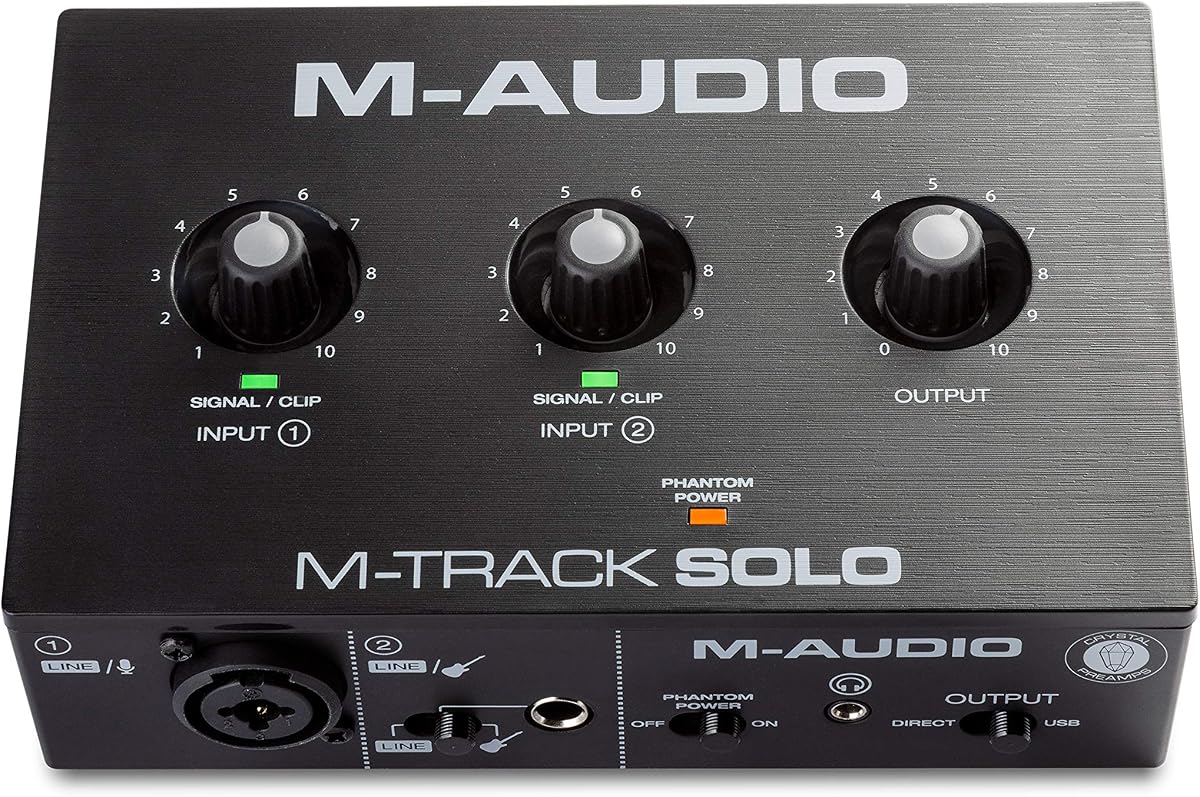
The M-AUDIO M-Track Solo is the simplest option for single microphone recording. It supports 48kHz resolution and includes a Crystal Preamp for clear sound capture.
We may earn a commission when you buy through this link, at no additional cost to you.
It comes with MPC Beats software to help you start producing music right away. The zero latency switch ensures you hear your audio in real time without delay.
While it has only one input it is sufficient for vocals or solo instruments. It is a great way to get started with audio recording without a big investment.
Buy this for simple podcasting or vocal tracks. It is a streamlined device that covers the basics effectively for beginners.
Perfect for solo artists who need to record one vocal or instrument track at a time.
Included software allows you to edit and mix your recordings immediately without extra purchases.
We may earn a commission when you buy through this link, at no additional cost to you.
The PreSonus AudioBox 96 offers great value with 24-bit 96kHz recording capabilities. It includes Class-A preamps for warm and clean sound quality.
We may earn a commission when you buy through this link, at no additional cost to you.
It comes with MIDI I/O which is essential for connecting keyboards and controllers. The included software suite provides a complete solution for home recording.
Phantom power is included to support condenser microphones. The unit is bus powered so you do not need an extra power supply for portability.
This is a solid choice for beginners needing MIDI support. It balances audio quality and connectivity to offer a strong all-in-one solution.
Connect your MIDI keyboards and controllers directly for a complete recording setup.
Get hardware and software together to start making music immediately without additional purchases.
We may earn a commission when you buy through this link, at no additional cost to you.
Selecting the right audio interface depends on your specific recording needs and hardware capabilities.
Ensure your PC has the necessary port. Legacy FireWire requires a PCIE card, while modern units use USB-C or USB-A for easier connection.
Check your motherboard slots before buying expansion cards to ensure compatibility.
Determine how many microphones or instruments you need to record simultaneously. Solo artists need one or two inputs while bands need more.
Choose an interface with enough inputs to avoid needing additional devices later.
Higher sample rates like 96kHz or 192kHz offer more detail but require more system power. 48kHz is standard for most online distribution.
Match the sample rate to your project needs and computer performance.
Stable drivers are critical to prevent audio dropouts. Look for brands with a reputation for reliable Windows support.
Read user reviews to confirm driver performance on your specific Windows version.
Many interfaces come with DAW software or plugins. This adds value and can save you from buying extra production tools.
Verify the software meets your workflow needs before relying on it fully.
If you use condenser microphones, ensure the interface provides 48V phantom power. This is necessary for these microphones to function.
Check if phantom power is global or per channel based on your usage.
Multiple headphone outputs allow for collaborative sessions where musicians need their own mix. Balanced outputs reduce noise in long cable runs.
Choose based on how you will monitor your audio during recording.
Consider if the interface has expansion options like ADAT or Thunderbolt. This allows you to add channels later without replacing the whole unit.
Invest in a model that can grow with your studio needs.
Start by connecting the interface to your PC using the correct cable. Ensure any required drivers are installed before connecting the device to prevent recognition issues.
Set your audio settings in your DAW to match the interface sample rate and buffer size. This prevents crackling or latency during recording sessions.
Keep your device dry and away from direct sunlight. Regularly update drivers to maintain compatibility with newer operating systems.
No most modern interfaces use USB-C or USB-A. Only specific legacy devices require FireWire which often needs an expansion card on modern PCs.
Yes most interfaces support direct monitoring and loopback features which are essential for high quality audio during live streams.
Phantom power supplies voltage to condenser microphones allowing them to produce sound. It is standard on most professional audio interfaces.
Interfaces often include DAW software but you can use any compatible digital audio workstation. Drivers are usually required to communicate with the PC.
USB 3 offers faster data transfer and lower latency for large projects. USB 2 is sufficient for most home recording needs.
Noise can be caused by ground loops or poor gain settings. Try using balanced cables and adjusting input levels carefully.
Yes if your interface has enough inputs. Check the specs for the maximum number of simultaneous tracks supported.
Yes some brands require different drivers for macOS. Always check system requirements for your specific operating system.
We covered ten options ranging from legacy expansion cards to modern USB solutions. Each offers unique benefits depending on your hardware and recording goals.
Prioritize stability and compatibility with your existing setup. Choose an interface that provides the necessary inputs for your current and future needs.
Always check current availability and support before buying. Verify driver support for your specific Windows version to ensure a smooth experience.