
JOYO Guitar Audio Interface
4.2Editor score
Direct monitoring
Pocket-sized design
No drivers required
This guide compares the top 10 audio interfaces for guitar recording, covering features, compatibility, and sound quality to help you choose the right device
Finding the right audio interface for guitar is essential for capturing clear, professional-quality recordings. Whether you are a home studio enthusiast or a touring musician, the right device ensures your instrument shines through any production workflow.
We have carefully evaluated ten top-rated models based on performance, connectivity, and value. Each product was analyzed for its preamp quality, latency, and software support to provide a comprehensive overview for musicians seeking reliable gear.
Each pick highlights unique strengths and ideal use cases to match your specific needs. Please note that prices and availability can change frequently, so verify current details before making your final purchase decision for your setup.
4.2Editor score
4.6Editor score

4.5Editor score
This side-by-side comparison highlights key specifications for each interface to help you quickly identify the model that best fits your recording environment and budget requirements.



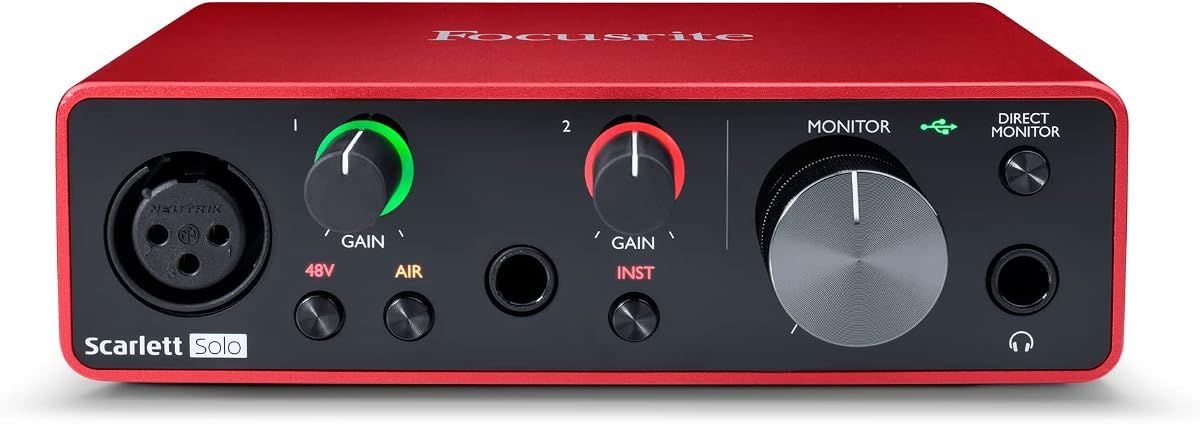
The Focusrite Scarlett Solo 3rd Gen stands out as a top choice for guitarists seeking professional sound quality. With its high-performance converters and versatile preamps, it delivers crystal-clear recordings suitable for both studio and home setups.
We may earn a commission when you buy through this link, at no additional cost to you.
Its high-headroom inputs ensure your guitar signals remain clean without unwanted clipping. The Gain Halos provide visual feedback, while the Air mode adds extra clarity to your acoustic instruments. Plus, the included software gives you everything to start recording immediately.
While it lacks MIDI ports and additional inputs, the focus on core performance makes it ideal for solo artists. The low-noise outputs ensure you hear every nuance, and the three-year warranty offers peace of mind for long-term use.
This interface is perfect for beginners and professionals alike who prioritize audio fidelity. If you need reliable, high-quality recording for guitars and vocals without complexity, this model is a definitive recommendation.
The Scarlett 3rd Gen features high-performance mic pre-amps that deliver a brighter recording with extra clarity for your instruments.
Gain Halos prevent unwanted clipping while the Air mode adds sparkle to acoustic instruments for a polished studio sound.
We may earn a commission when you buy through this link, at no additional cost to you.
The JOYO MOMIX CAB is an incredible value for guitarists who need to record on the go. This pocket-sized interface connects directly to your phone or tablet, offering zero-latency monitoring without the need for batteries or drivers.
We may earn a commission when you buy through this link, at no additional cost to you.
Ideal for capturing song ideas during rehearsals or live streaming, it passes your clean guitar signal straight to your headphones. The clip design ensures it stays secure on your belt or strap, making it truly mobile for any inspiration moment.
However, note that it does not support real-time software amp simulations. It is designed primarily for recording dry tracks or monitoring alongside backing tracks. Ensure you have the correct cables and enable OTG on Android for best results.
If you need a simple, affordable solution for mobile recording or practice, this interface is unmatched. It brings essential functionality to a budget-friendly package that fits anywhere.
Just connect to your USB-C or Lightning port and plug in your guitar to start recording immediately with no drivers or software needed.
Smaller than a key, it clips securely to your pocket or strap for true mobile recording anywhere inspiration strikes.
We may earn a commission when you buy through this link, at no additional cost to you.
The M-AUDIO M-Track Duo offers excellent versatility with two combo inputs, making it ideal for recording guitar and vocals simultaneously. Its Crystal Preamps ensure pristine sound for condenser microphones and instruments alike.
We may earn a commission when you buy through this link, at no additional cost to you.
Monitoring is hassle-free with dedicated 1/4 outputs and a USB/Direct switch for zero-latency tracking. The included MPC Beats software provides essential production tools, enhancing its value for home studio creators and podcasters.
While it operates at 48kHz rather than higher rates, it delivers reliable performance for most recording needs. The compact design fits well on any desk, and the RCA outputs offer additional flexibility for your setup.
This interface is a solid choice for those who need more than one input without breaking the bank. Its balance of features and affordability makes it a strong contender in the mid-range category.
Record guitar and vocals at the same time using two combo XLR/Line/Instrument inputs with phantom power available.
Transparent preamps deliver optimal sound for all mics while MPC Beats provides essential production tools for your creative journey.
We may earn a commission when you buy through this link, at no additional cost to you.
The IK Multimedia iRig USB is designed for seamless connection with modern devices like the iPhone 15, iPad, and Mac. It offers high-quality 24-bit/48kHz audio capture, ensuring your recordings retain professional standards across platforms.
We may earn a commission when you buy through this link, at no additional cost to you.
Its direct monitoring feature allows silent practice, while the dedicated Amp out lets you connect to your pedal rig with selectable FX or THRU settings. The compact, robust design ensures it withstands travel demands.
Note that it does not work with Lightning cables, so USB-C is required for optimal performance. The bundled software suite helps you jumpstart your creative journey, providing tools to craft music easily.
For iOS users needing a reliable interface that integrates well with apps, this model is excellent. It bridges the gap between mobile and desktop recording with ease and durability.
The included USB-C cable ensures compatibility with Mac, PC, iPad, and new iPhone 15 models for hassle-free connections.
Connect to your amp and pedal rig with selectable FX processed or THRU direct settings for flexible tone shaping.
We may earn a commission when you buy through this link, at no additional cost to you.
The MAONO PS22 Lite is tailored for content creators and streamers who need high-fidelity audio for broadcasts. With 24-bit/192kHz resolution and ASIO support, it captures every detail of your sound with impressive clarity.
We may earn a commission when you buy through this link, at no additional cost to you.
Its ProStudio Routing Software offers loopback capabilities, allowing you to mix system audio with your microphone or guitar easily. The intuitive mode switching simplifies setup for recording, broadcasting, or instrument use.
While the included cable is USB-A to USB-C, this limits direct laptop connection without an adapter. However, the ergonomic design and dynamic light ring make monitoring simple and cable clutter minimal.
If streaming or live broadcasting is your focus, this interface provides the tools needed to sound professional. Its balance of performance and ease of use makes it a top choice for creators.
The ProStudio Routing Software opens up a world of possibilities with virtual channels and loopbacks for flexible broadcasting.
With 24-bit/192kHz and 106dB dynamic range, it ensures your sound is as clear and realistic as the original performance.
We may earn a commission when you buy through this link, at no additional cost to you.
The PIYONE USB Audio Interface delivers studio-quality sound with high-performance converters and class-compliant connectivity. Its elegant design with illuminated LED rings adds a professional look to any setup.
We may earn a commission when you buy through this link, at no additional cost to you.
Two combo jacks allow maximum flexibility for microphones or instruments, while phantom power ensures clean gain for condenser mics. The direct monitor feature supports silent tracking, and loopback simplifies streaming tasks.
Without a bundled software suite, you will need your own DAW. However, the compact build and USB-C port eliminate bulky external supplies, making it ready for mobile and desktop use immediately.
For those who value design and high-fidelity sound, this interface is a strong contender. It combines practical features with a premium aesthetic for a polished recording experience.
High-performance converters ensure crystal-clear, low-noise recordings with professional resolution for music production.
The Direct Monitor feature allows for silent, zero-latency tracking with standard headsets via 3.5mm jack.
We may earn a commission when you buy through this link, at no additional cost to you.
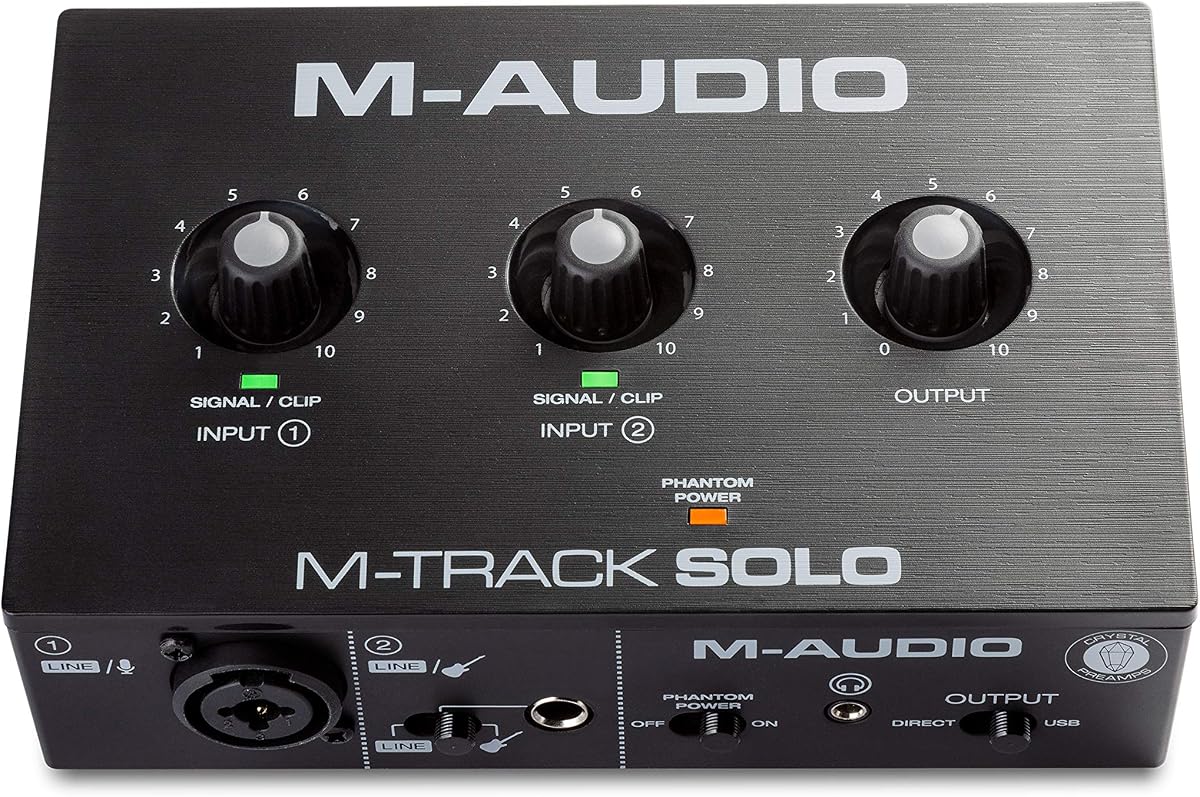
The M-AUDIO M-Track Solo is a perfect entry-level interface for solo musicians needing simple, reliable recording. It supports one combo input for mic or instrument, ensuring versatile connections for your studio.
We may earn a commission when you buy through this link, at no additional cost to you.
The transparent Crystal Preamp guarantees optimal sound for microphones, while the USB/Direct switch provides zero-latency monitoring. Included MPC Beats software offers essential production tools for creative projects.
RCA outputs offer flexibility for speakers, but the single input limits simultaneous recording. Despite this, its compact design and ease of use make it ideal for podcasters and solo artists.
If you need a cost-effective solution for single-track recording, this model delivers quality without complexity. Its straightforward features help you focus on creating music rather than managing settings.
The transparent Crystal Preamp guarantees optimal sound from all your microphones including condenser mics for clear recordings.
Includes MPC Beats Software complete with the essential production tools from Akai Professional to kickstart your workflow.
We may earn a commission when you buy through this link, at no additional cost to you.
The Arturia MiniFuse 1 stands out for its extensive software bundle and MIDI support. Whether you are recording voice, guitar, or synths, its plug-and-play workflow gets you creating in seconds.
We may earn a commission when you buy through this link, at no additional cost to you.
Loopback features make it perfect for capturing in-game or in-app audio, while the 5-year warranty reflects robust build quality. The included tutorials and readymade projects help beginners get started quickly.
Although it has only one audio input, the MIDI I/O and USB hub add significant value for producers. The balanced line outputs ensure clean monitoring, and the compact design fits anywhere.
For musicians looking to expand into MIDI and production, this interface is an excellent starting point. Its warranty and included tools provide exceptional value over the long term.
Each interface is tested with over 200 reliability tests, offering one of the most extensive warranties on the market.
Sync up with MIDI gear like synths and controllers with included 5-pin MIDI input and output connections.
We may earn a commission when you buy through this link, at no additional cost to you.
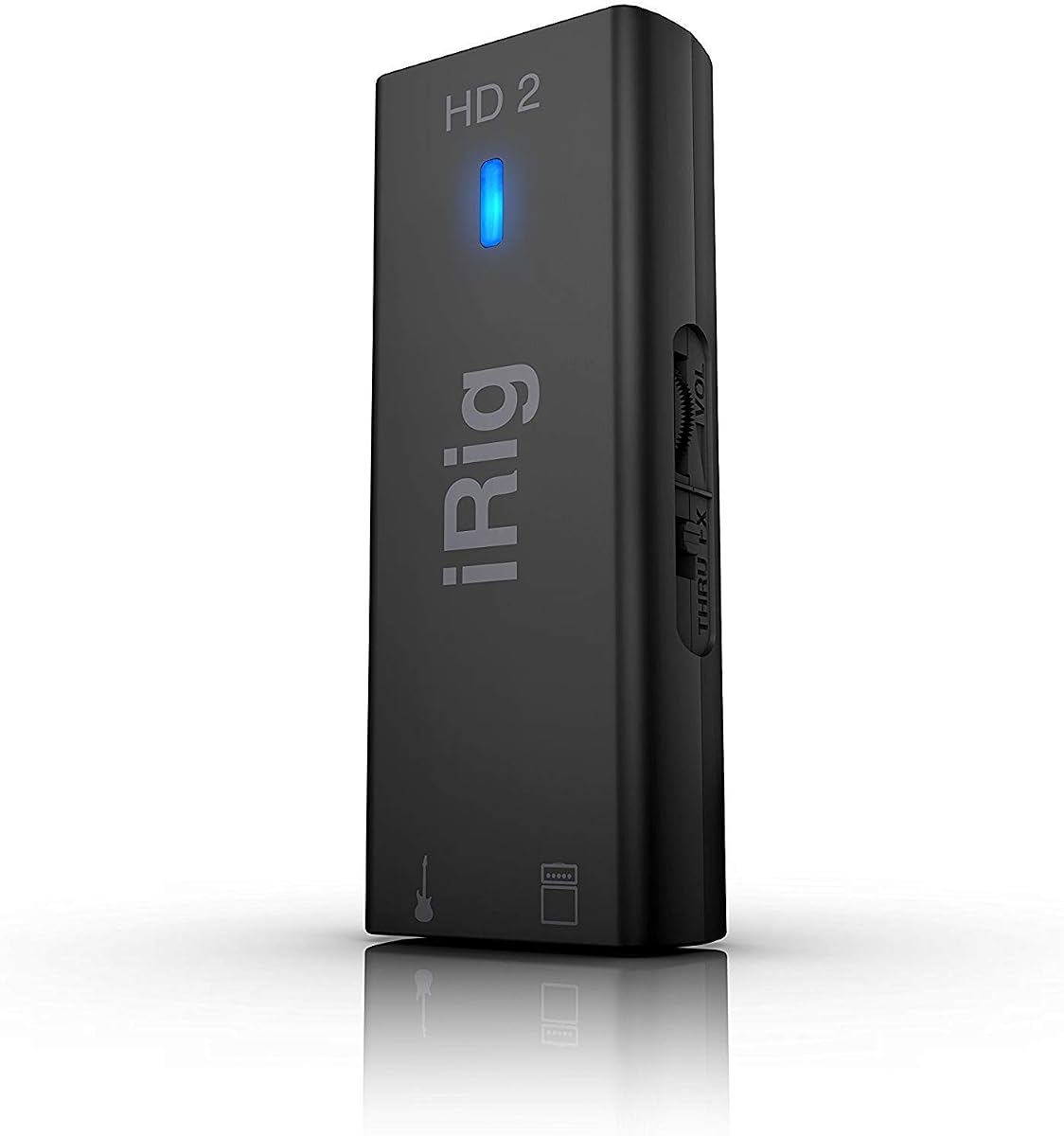
The IK Multimedia iRig HD 2 is renowned for its high-definition digital guitar interface, featuring a 96kHz sampling rate. It supports iPhone, iPad, Mac, and PC with included USB-C and Lightning cables.
We may earn a commission when you buy through this link, at no additional cost to you.
You can connect to an amplifier via the 1/4 out Amp Out jack, with switchable FX and Thru options to match your signal chain. The headphone output with preamp lets you practice silently without compromising performance.
While the included cables ensure compatibility, the price is higher than standard USB interfaces. However, the lightweight construction and exclusive Amplitude software content make it a favorite for mobile musicians.
If you prioritize iOS compatibility and high-resolution audio on the go, this interface is ideal. It balances portability with professional features to unlock your creative potential.
High-definition digital interface works seamlessly with a high-quality 1/4 Hi-Z input jack across all major devices.
With 96kHz sampling, the headphone output and level control let you lose yourself in practice without sacrificing performance.
We may earn a commission when you buy through this link, at no additional cost to you.
The Fender Quantum HD 2 represents the pinnacle of audio interface performance with ultra-high-fidelity converters and MAX-HD mic preamps. Designed for music production, it captures pristine vocal and instrument details.
We may earn a commission when you buy through this link, at no additional cost to you.
Front-facing instrument inputs are optimized for transparent recording, while Auto Gain sets perfect levels instantly. ADAT and S/PDIF I/O allow hybrid studio growth, and re-amp outputs explore new tones easily.
While the price is high, the perpetual license for Fender Studio Pro justifies the investment. The DSP monitor mixer and loopback routing streamline streaming and podcasting tasks effectively.
For professionals needing expandability and studio-grade sound, this interface is unmatched. It combines robust features with brand-specific tools for a comprehensive production solution.
32-bit/192 kHz converters ensure professional clarity for studios, creators, and musicians alike.
Auto Gain instantly sets perfect recording levels while dual re-amp outputs let you explore new tones with external gear.
We may earn a commission when you buy through this link, at no additional cost to you.
Selecting the right audio interface involves evaluating sound quality, connectivity, and compatibility with your workflow to ensure a seamless recording experience.
Audio resolution determines the clarity and detail of your recordings. Look for interfaces that support at least 24-bit/48kHz for professional quality, while higher rates like 192kHz offer more headroom for production.
Choose a model with sufficient resolution to match your recording needs without unnecessary overhead.
USB-C and Lightning connections offer modern portability and speed, whereas older USB-A setups may limit mobility. Ensure the interface matches your device's ports to avoid needing adapters.
Confirm that the interface type aligns with your computer or mobile setup for optimal connectivity.
High-quality preamps ensure your guitar signals are captured cleanly without unwanted noise or distortion. Look for transparent preamps with sufficient gain for your specific instruments and microphones.
Prioritize interfaces with proven preamp performance to maintain sound fidelity throughout your recordings.
The number of inputs dictates your recording flexibility. Single-channel interfaces suit solo artists, while multi-channel models support simultaneous vocal and guitar recording.
Determine the minimum inputs you need based on your typical recording sessions to avoid overspending.
Phantom power is essential for condenser microphones. If you plan to record vocals alongside guitar, ensure the interface provides 48V phantom power for your mics.
Verify phantom power availability to support your microphone requirements effectively.
Many interfaces come with recording software and effects that can enhance your production capabilities. Evaluate whether these tools are useful for your workflow or if you already own alternatives.
Consider the value of included software when comparing models to maximize your initial investment.
Low-latency monitoring is critical for recording live guitar without delay. Look for hardware direct monitoring features to hear your sound in real time.
Ensure the interface supports zero-latency monitoring to maintain your creative flow.
If you record on the go, compact and durable designs are vital. Interfaces with built-in clip or lightweight materials are easier to transport.
Select a form factor that fits your lifestyle and mobility needs.
Connect your guitar directly to the instrument input using a high-quality instrument cable to ensure a clean signal path. Adjust the input gain slowly to avoid clipping while monitoring through headphones.
Use the direct monitoring feature to eliminate latency during recording sessions. This ensures you hear your guitar sound in real time without digital delay.
Keep the interface away from moisture and extreme temperatures to preserve its components. Regularly check cables and update drivers to maintain optimal performance over time.
Many modern interfaces are class-compliant and work without additional drivers on Mac or PC. However, check the product specifications to ensure your operating system is supported without extra software.
Yes, some interfaces connect via USB-C or Lightning ports directly to smartphones. Ensure your device supports OTG or direct connection capabilities before purchasing.
Phantom power provides electricity to condenser microphones, allowing them to function correctly. It is essential if you plan to use condenser mics for vocals alongside guitar recordings.
A digital audio workstation is required to process and record audio files. Most interfaces include free DAW software that lets you start recording immediately without buying extra tools.
Keep cables short, use balanced connections, and avoid placing the interface near power sources. Proper gain staging also prevents unwanted hiss or hum.
USB-C offers faster data transfer and reversible connectivity, making it more convenient. It also supports power delivery for bus-powered interfaces without extra adapters.
Zero-latency monitoring allows you to hear your sound directly from the interface hardware rather than through software processing. This eliminates delay during recording sessions for natural playing.
This depends on the number of inputs available on the interface. Multi-channel interfaces allow you to connect multiple microphones simultaneously for group recordings.
The top picks reviewed highlight a wide range of options for every budget and skill level. Whether you need mobile convenience or studio power, there is a suitable interface for your setup.
Prioritize features like preamp quality, input count, and connectivity when making your final decision. Focus on what matters most for your typical recording sessions.
Remember that prices and availability can change frequently. Always check the latest details before purchasing to ensure you get the best value for your needs.