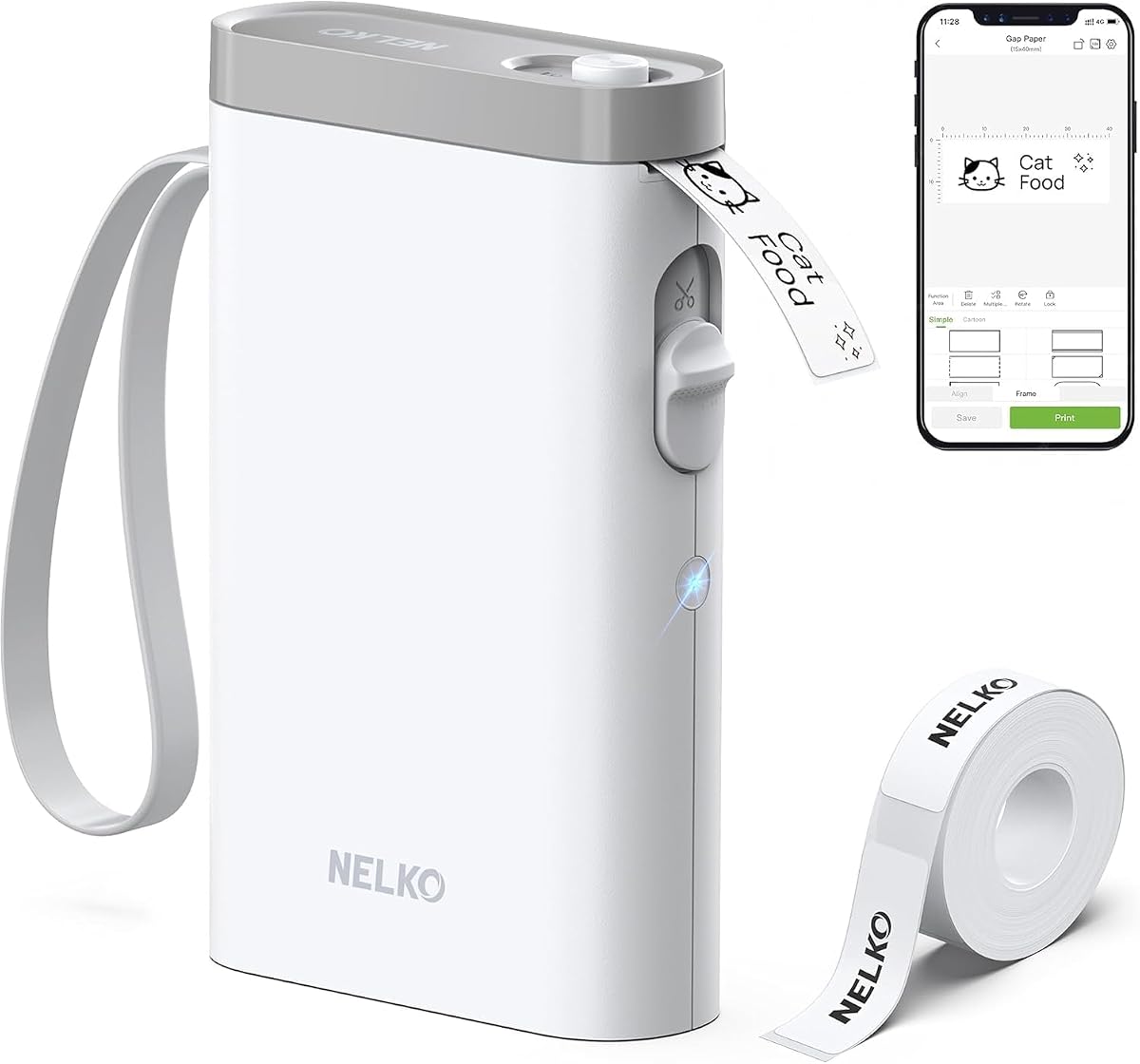
Nelko P21 Label Maker
4.4Editor score
Portable Bluetooth design
Direct thermal printing
Extensive app templates
Finding the right label printer for library environments requires balancing speed, durability, and ease of use. Librarians need systems that can handle high volumes of cataloging and shelving labels without frequent jams or errors.
We compared ten leading models based on connectivity options, print resolution, tape compatibility, and software flexibility. Each product was evaluated for its ability to support efficient library workflows and long-term reliability.
Each pick highlights specific strengths for library tasks like spine labeling, asset tracking, and bin organization. Please note that availability and pricing can change frequently, so check current listings before purchasing.
4.4Editor score

4.5Editor score

4.3Editor score
As an Amazon Associate we earn from qualifying purchases.
This side-by-side comparison highlights key specifications for each model to help you identify the best fit for your library's specific tagging and organization needs.



The Brother P-Touch PT-D610BT stands out as a top choice for libraries needing robust labeling capabilities. With a rating of 4.5 stars, it delivers professional-grade results for spine labels and asset tags.
We may earn a commission when you buy through this link, at no additional cost to you.
Its Bluetooth and USB connectivity allow multiple staff members to design labels from their own devices. The built-in memory stores 90 frequently used labels, speeding up repetitive tasks during cataloging sessions.
While it comes at a higher cost, the durability and speed justify the investment for active library environments. The automatic cutter ensures clean edges every time, maintaining a professional look.
Librarians seeking efficiency and versatility will find this model invaluable. It reduces errors through its large preview screen and supports complex layouts with ease.
The QWERTY keyboard and large display make typing long catalog numbers quick and accurate without external tools.
High-resolution printing ensures barcodes and small text remain scannable even after years of handling and environmental exposure.
We may earn a commission when you buy through this link, at no additional cost to you.
This professional model excels in larger libraries where multiple stations need access to a central printer. It earns high marks for its versatility in handling both small address labels and long banners.
We may earn a commission when you buy through this link, at no additional cost to you.
Connectivity options including Ethernet and Wi-Fi ensure that any device on the network can send print jobs instantly. This reduces bottlenecks during busy periods like new book intake or inventory audits.
The ability to print in black and red adds visual hierarchy to labels, which is useful for highlighting priority items or caution notices within collections.
While the initial configuration might take time, the long-term efficiency gains make it a solid investment for institutions with high-volume labeling requirements.
Printing up to 110 standard address labels per minute allows staff to clear backlogs quickly during peak operational hours.
Support for labels up to three feet long enables custom signage for special collections or temporary display areas.
We may earn a commission when you buy through this link, at no additional cost to you.
The Nelko P21 offers an accessible entry point for small libraries or individual departments needing basic labeling. Its portable nature makes it ideal for on-the-go tasks like sorting returns or organizing bins.
We may earn a commission when you buy through this link, at no additional cost to you.
Users appreciate the straightforward Bluetooth connection to mobile devices. The app provides thousands of templates and icons, allowing creative customization without technical expertise.
While it lacks desktop software integration, the convenience of carrying it anywhere often outweighs this limitation for smaller operations. The thermal printing method keeps ongoing costs low.
For schools or community centers with tight budgets, this model provides reliable functionality without compromising on essential features like waterproof tape options.
The compact size fits easily in a pocket or bag, enabling staff to label items directly at the shelf or desk.
Direct thermal technology means no ink or toner cartridges are required, significantly reducing long-term maintenance expenses.
We may earn a commission when you buy through this link, at no additional cost to you.
This bundle is perfect for personal libraries or small branch offices where simplicity is key. It comes ready to use with included tapes, removing the need for immediate additional purchases.
We may earn a commission when you buy through this link, at no additional cost to you.
The QWERTY keyboard ensures fast typing, while the included tapes allow for immediate organization of files and bins. It handles common labeling tasks without any software dependencies.
While it lacks advanced connectivity, its reliability and ease of use make it a favorite among volunteers or staff who need quick solutions. The compact size fits well on crowded desks.
For those prioritizing value and immediate functionality, this model delivers consistent results with minimal setup time or technical support.
Including multiple full-length tapes means you can start labeling your collection immediately after unboxing the device.
The full keyboard layout allows for quick entry of catalog numbers or author names without navigating complex menus.
We may earn a commission when you buy through this link, at no additional cost to you.
This printer bridges the gap between desktop convenience and network flexibility. It is well-suited for libraries with mixed operating systems, ensuring all staff can access labeling tools easily.
We may earn a commission when you buy through this link, at no additional cost to you.
With speeds up to 110 labels per minute, it handles high-volume tasks efficiently. The ability to switch between black and red ink allows for better visual distinction in complex shelving systems.
While some users report occasional Wi-Fi interruptions, the USB fallback ensures workflow continuity. Its robust build quality suggests it can withstand daily use in busy environments.
For institutions needing a reliable, fast printer that integrates seamlessly into existing IT infrastructure, this model offers a compelling balance of performance and connectivity.
Compatibility with both Windows and Mac means diverse teams can share the device without compatibility headaches or driver conflicts.
Using red ink for alerts or priority items helps staff quickly identify urgent tasks or restricted materials on shelves.
We may earn a commission when you buy through this link, at no additional cost to you.
SUPVAN offers a compelling alternative for those prioritizing mobile workflows. The included tapes and free app make it a complete package for quick labeling tasks around the library.
We may earn a commission when you buy through this link, at no additional cost to you.
The auto size recognition feature minimizes setup time, allowing staff to focus on content rather than configuration. It handles various label shapes well, from squares to rounds.
Though it lacks desktop software, the robust feature set within the mobile app is sufficient for most organizational needs. Users report clear print quality suitable for long-term archiving.
This device is ideal for teams that rely heavily on smartphones for daily tasks and want an affordable way to implement consistent labeling standards.
The app automatically detects tape dimensions, removing the need to manually input settings for every new roll of labels.
With over 600 icons and customizable fonts, libraries can create branded labels that match their unique style guide easily.
We may earn a commission when you buy through this link, at no additional cost to you.
This model focuses on straightforward, high-performance desktop labeling. It is excellent for tasks that require precision, such as creating standardized shipping or archival labels.
We may earn a commission when you buy through this link, at no additional cost to you.
The plug-and-play nature eliminates complex driver installations, making it easy to deploy across multiple workstations. Print quality remains sharp even at high speeds.
While it lacks wireless features, the stability of a wired connection ensures consistent performance during long print sessions. It is a dependable workhorse for fixed desk locations.
Libraries looking for a no-fuss printer that delivers professional results every time will appreciate its consistency and ease of maintenance over long periods.
The USB interface allows for immediate connection to computers without needing additional network configuration or wireless setup steps.
The built-in auto-cutter ensures every label is cut cleanly at the exact length required, maintaining a professional appearance.
We may earn a commission when you buy through this link, at no additional cost to you.
The NIIMBOT B1 is designed for users who need mobility without sacrificing connectivity options. It offers both Bluetooth and USB, providing flexibility depending on the task at hand.
We may earn a commission when you buy through this link, at no additional cost to you.
Its auto shut-off feature conserves battery life, ensuring the device is ready when needed. The app includes a vast library of symbols suitable for categorizing diverse collection types.
While it is not compatible with tablets, its support for phones and PCs makes it versatile for most users. The compact design makes it easy to store in drawers when not in use.
For individual collectors or smaller branches needing a budget-friendly device with decent features, this model provides solid performance and convenient portability.
Support for both Bluetooth and USB allows you to switch between mobile and desktop workflows seamlessly without hardware changes.
Auto shut-off after inactivity helps preserve power so you can use it throughout the day without constant recharging.
We may earn a commission when you buy through this link, at no additional cost to you.
This model offers an impressive array of features for its price point, including Excel import for bulk labeling. It is particularly useful for libraries managing extensive inventory lists.
We may earn a commission when you buy through this link, at no additional cost to you.
The included tapes cover multiple sizes, reducing initial costs for new users. Battery life is exceptional, ensuring the device stays ready for occasional but critical labeling tasks.
While some default settings like auto power-off may require adjustment, the overall functionality supports both simple and complex labeling needs. It handles batch jobs efficiently.
Ideal for libraries wanting to streamline data entry without expensive software, this device offers robust capabilities that scale with organizational needs over time.
Excel import allows you to print multiple labels at once, saving significant time when processing large batches of incoming books.
Tapes are waterproof and oil-resistant, ensuring labels remain legible even in humid or dusty environments like basements or attics.
We may earn a commission when you buy through this link, at no additional cost to you.
The Seiko Smart Label Printer offers a straightforward, reliable solution for those who prefer desktop computing. Its software is intuitive, allowing quick customization of labels without complex settings.
We may earn a commission when you buy through this link, at no additional cost to you.
With a print speed of 2.76 inches per second, it keeps up well with typical library demand. The front-load design makes changing tape rolls quick and simple.
While it lacks the latest mobile features, its stability and simplicity make it a great choice for dedicated workstations. It produces clear, durable labels suitable for archives.
For libraries with existing workflows centered on desktop PCs, this printer integrates smoothly and provides consistent performance without requiring constant maintenance or updates.
The included software simplifies formatting and customization, making it accessible even for users with minimal technical training.
Front load design allows staff to swap rolls quickly without disassembling parts of the printer during busy shifts.
We may earn a commission when you buy through this link, at no additional cost to you.
Selecting the right label printer involves considering connectivity, print quality, tape durability, and software compatibility to match your library's specific workflows.
Consider whether you need standalone printing or network sharing. Bluetooth offers mobility, while Ethernet ensures reliability for busy environments.
Choose based on how your staff access the device daily.
High-volume libraries benefit from faster models that can produce hundreds of labels quickly. Look for speeds over 90 labels per minute.
Faster speeds reduce bottlenecks during intake.
Ensure tapes are waterproof and scratch-resistant. Library labels face constant handling and exposure to dust and moisture.
Durable tape maintains legibility over time.
Check if the printer supports your existing OS and software. Desktop integration is vital for bulk processing tasks like Excel imports.
Seamless integration saves setup time.
Some printers handle a wider range of widths. Ensure your model supports both small spine labels and large shelf tags.
Versatility reduces the need for multiple devices.
User interfaces vary from simple keyboards to complex apps. Choose a system that staff can learn quickly without extensive training.
Intuitive designs improve workflow efficiency.
Start by installing the latest firmware or app version to ensure optimal performance. Most modern printers pair easily via Bluetooth or USB cables.
Always load tapes correctly to avoid jams. Ensure the roll sits flat and the adhesive side faces out as indicated by the device guides.
Clean the print head periodically with a soft cloth to maintain quality. Store the unit in a dry place when not in use to extend battery life.
While possible, thermal label printers are specifically designed for durability and cost efficiency. They save on ink costs and produce weather-resistant outputs ideal for libraries.
Most libraries prefer 12mm or 0.5 inch widths for standard book spines. Ensure your printer supports this specific size for accurate placement.
Restart both the printer and your device. Check that drivers or apps are updated. For Bluetooth, ensure no other devices are interfering with the signal.
Yes, thermal printers provide fade-resistant outputs. However, choose archival-quality tape specifically to ensure long-term stability in climate-controlled environments.
Most models support barcode generation. Ensure your software has a barcode function and test printing for scannability before mass production.
Many offer rechargeable batteries for mobility. However, desktop units may require constant power during high-volume sessions to prevent interruptions.
The Brother P-Touch PT-D610BT remains the top recommendation for its versatility and ease of use across various library tasks.
Prioritize durability and connectivity when making your decision. Investing in a robust system now can prevent maintenance issues later.
Always verify current stock and specs before purchasing to ensure the model still meets your library's evolving operational standards.