
SuperEar SE5000 Hearing Amplifier
4.2Editor score
Portable sound amplifier
Includes stereo headphones
Adjustable volume control
This comprehensive guide compares the top assistive listening devices for TV to help you choose the best solution for clearer dialogue and comfortable home
Watching television should be a relaxing experience, but hearing difficulties can turn it into a struggle. Assistive listening devices for TV offer a practical solution by amplifying sound directly to the user.
We evaluated ten leading models based on connectivity, sound quality, comfort, and ease of use. Our analysis focuses on devices that deliver clear dialogue without disrupting the household environment.
Each selection highlights unique strengths for different needs and budgets. Keep in mind that product availability and terms may vary over time as manufacturers update their lineups.
4.2Editor score

4.0Editor score

4.1Editor score
The following table provides a side-by-side overview of each device's core specifications and connection types to help you quickly identify the right fit for your setup.




The Avantree Audikast 4HA stands out as a forward-thinking solution for those using Auracast-enabled hearing aids. It streams TV audio directly to the device with a solid rating from users who value seamless connectivity.
We may earn a commission when you buy through this link, at no additional cost to you.
Its primary strength lies in allowing listeners to adjust volume directly on their hearing aid or companion app. This independence from the TV remote makes shared viewing more comfortable for everyone in the room.
While stable, the system requires an initial setup through the hearing aid app to join the broadcast. Users must also verify their specific hearing aid model is supported before purchase to avoid compatibility issues.
This device is ideal for households where at least one member uses compatible hearing technology. It offers a reliable bridge between modern smart TVs and personal assistive listening needs.
Direct streaming means no extra headphones are needed if you already wear compatible hearing aids.
Firmware updates via USB help ensure long-term support as new hearing aid models are released.
We may earn a commission when you buy through this link, at no additional cost to you.
The SuperEar SE5000 offers an affordable entry point into personal sound amplification. Users appreciate its ability to capture and amplify ambient sounds, making it useful for both TV watching and conversations.
We may earn a commission when you buy through this link, at no additional cost to you.
It comes with a complete set of accessories including deluxe stereo headphones and discreet earbuds. The tactile volume control wheel allows for easy adjustments without needing to fumble with small buttons.
Because it does not connect directly to the TV, it amplifies sound from the TV speakers rather than receiving a dedicated signal. This means it works best in smaller rooms where the amplifier can be positioned close to the screen.
Ideal for seniors seeking a versatile tool for daily activities beyond just television, this device balances cost with functionality effectively.
The package includes both headphones and earbuds to suit different comfort preferences.
Up to 30 hours of battery life ensures the device lasts through multiple viewing sessions.
We may earn a commission when you buy through this link, at no additional cost to you.
The Conqier 2.4G Digital Wireless Headphones deliver high-quality audio with zero lag, a critical feature for keeping video and sound synchronized. The RF connection ensures stability even when moving between rooms.
We may earn a commission when you buy through this link, at no additional cost to you.
Its optical bypass feature allows simultaneous use with a soundbar or receiver. This means the user can enjoy personal volume control while others in the room listen through the main speakers.
The lightweight design and flexible arms provide comfort for extended sessions, though some users may need time to adjust to the under-chin headset style. Battery life supports all-day viewing without interruption.
This device is a top recommendation for those who want premium features and flexibility without sacrificing shared family viewing experiences.
Optical bypass lets you keep your existing soundbar active while using headphones.
Tone control and balance settings let you tailor sound to your specific hearing profile.
We may earn a commission when you buy through this link, at no additional cost to you.
The Avantree Oasis Aura extends Auracast broadcasting to larger environments. It functions as an audio adapter that can broadcast to multiple compatible hearing aids or headphones simultaneously.
We may earn a commission when you buy through this link, at no additional cost to you.
With a range up to 100 meters, it covers homes and small venues without signal dropouts. Users can connect via Optical, AUX, or Bluetooth input to source the audio signal.
Performance may be reduced in spaces with thick walls or heavy obstructions. Additionally, it does not work with standard Bluetooth headphones, limiting its use to specific Auracast-enabled devices.
This is a practical choice for open floor plans or multi-user setups where multiple listeners need to stay connected to the same audio source.
Ideal for open-concept homes where users may sit far from the TV.
Broadcasts to several hearing aids or headphones at once for shared listening.
We may earn a commission when you buy through this link, at no additional cost to you.
The TV EARS Analog Wireless Headsets System is designed specifically for older television models with RCA or 3.5mm audio outputs. It delivers 120 dB of voice clarifying sound to help dialogue stand out.
We may earn a commission when you buy through this link, at no additional cost to you.
The RF transmitter ensures a secure connection without pairing or apps. Users appreciate the ability to adjust volume independently from the TV remote, making it easy to watch without disturbing others.
Battery life is modest at around four hours per charge, which may require frequent charging during long binge watching sessions. It is best suited for those with specific analog TV hardware needs.
This system offers a straightforward solution for legacy setups where digital streaming options are not available or desired.
Perfect for older TVs that lack digital optical or HDMI audio outputs.
Foam ear tips help block ambient noise for a more immersive listening experience.
We may earn a commission when you buy through this link, at no additional cost to you.
The TV EARS Improved Digital Wireless Headset System offers robust amplification with up to 120 dB of volume. It includes proprietary voice clarifying technology to enhance speech clarity while reducing background noise.
We may earn a commission when you buy through this link, at no additional cost to you.
Setup is simple with large dials and indicator lights. There is no need for pairing, programming, or phone apps, making it highly accessible for users who prefer straightforward technology.
It supports both modern digital and older analog connections, providing wide compatibility. However, it lacks the advanced settings found in newer smart models.
This headset is a reliable choice for seniors who need maximum volume and simplicity without navigating complex digital menus.
Easy to read dials and lights remove the need for technical knowledge.
Handles both modern digital and analog audio outputs with ease.
We may earn a commission when you buy through this link, at no additional cost to you.
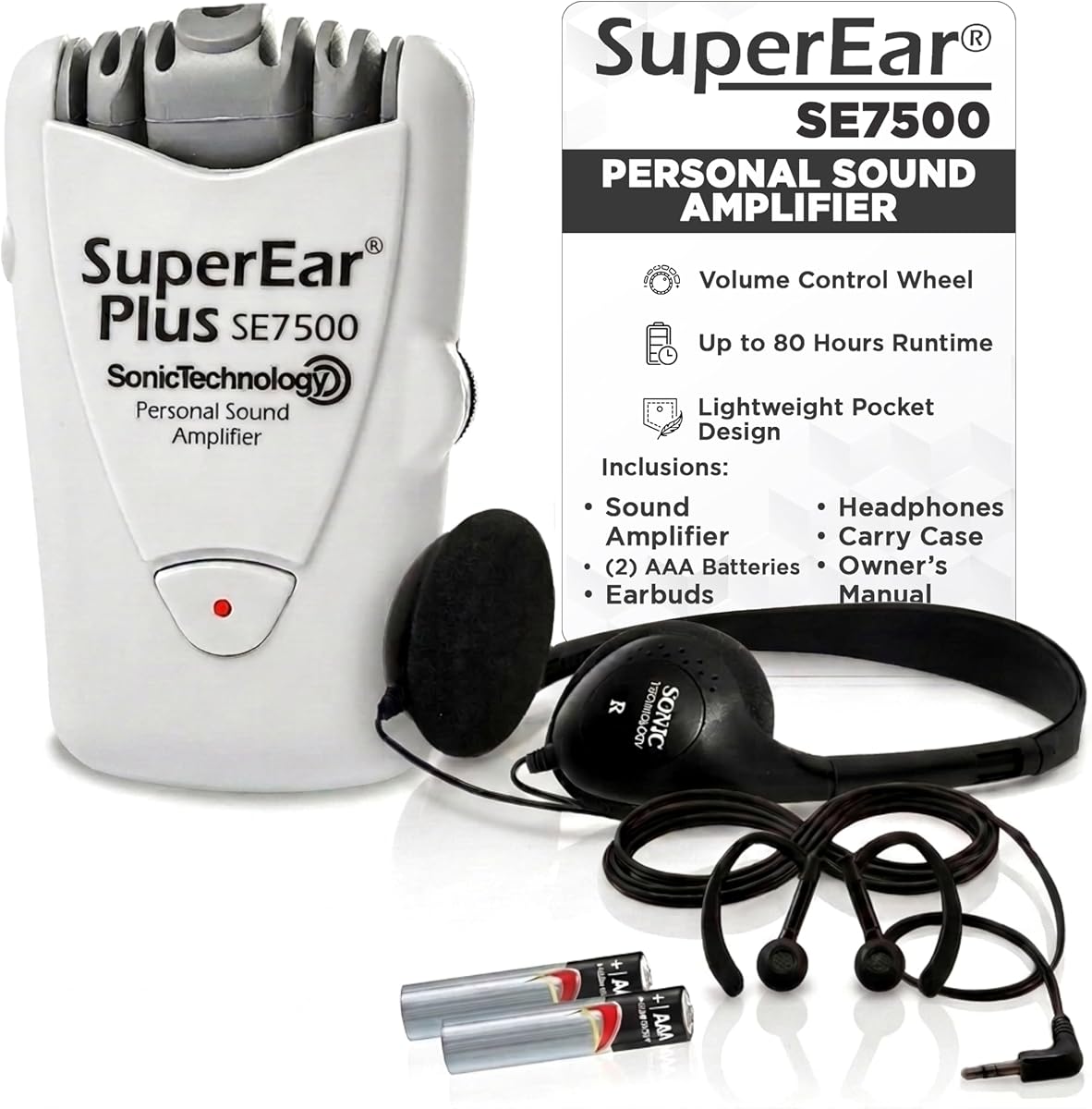
The SuperEar SE7500 provides up to 80 hours of battery life with an automatic shut-off feature. It is a personal sound amplifier designed for both TV watching and general conversations.
We may earn a commission when you buy through this link, at no additional cost to you.
Users benefit from a redesigned microphone that minimizes carry noise. The package includes lightweight earbuds, headphones, and a belt clip, offering various options for how to listen comfortably.
As a handheld amplifier, it works by capturing sound from speakers rather than connecting directly to the TV. This approach is versatile but requires proper placement for optimal results.
This device is highly practical for active users who need a reliable companion for multiple daily listening tasks.
80 hours of battery life means less frequent charging for daily use.
Improved microphone design helps isolate desired sounds from background clutter.
We may earn a commission when you buy through this link, at no additional cost to you.
The Williams Sound PockeTalker Ultra DUO is built for reliability, backed by a five year manufacturer warranty. It offers up to 100 hours of battery life for long-term use without interruption.
We may earn a commission when you buy through this link, at no additional cost to you.
It includes a removable microphone with an extension cord and a 12-foot TV listening cord. External controls allow users to adjust volume and tone without fumbling with internal settings.
While the device is handheld, its durability and power make it a robust choice for regular users who need consistent performance over time.
The warranty adds significant value and peace of mind for those investing in a long-term assistive listening solution.
A comprehensive warranty ensures support and service for the long haul.
Up to 100 hours of battery life minimizes downtime for charging.
We may earn a commission when you buy through this link, at no additional cost to you.
The SIMOLIO Wireless TV Headphones offer a wireless range of up to 164 feet. This allows users to move freely around the house while maintaining a strong audio signal.
We may earn a commission when you buy through this link, at no additional cost to you.
Features like voice highlighting and noise reduction help dialogue stand out clearly. The optical bypass permits simultaneous use with a soundbar so others can listen normally.
A spare battery in the transmitter base keeps the device ready for use. Ambient sound mode lets you hear conversations nearby without removing the headphones.
This model is excellent for those who need freedom of movement and reliable connectivity in larger living spaces.
Signal penetrates walls and ceilings to cover most home layouts.
Spare base battery ensures no interruptions during long viewing sessions.
We may earn a commission when you buy through this link, at no additional cost to you.
The SEREONIC Portable Wireless TV Speakers provide a compact speaker solution that you can place next to your viewing area. It delivers up to 95 dB of custom-tuned audio with zero lag.
We may earn a commission when you buy through this link, at no additional cost to you.
You can connect via RCA, 3.5mm, or digital optical jacks. The wireless range extends to 100 feet, allowing you to move around while staying connected.
The base charges via USB and offers about eight hours of continuous operation. While it needs a wired connection to the TV, it works with most digital audio formats.
This is a great choice for users who prefer speakers over headphones but still want the freedom of a wireless setup.
Place the speaker close to you for clear audio without increasing TV volume.
Works with RCA, AUX, and Optical inputs to suit various TV models.
We may earn a commission when you buy through this link, at no additional cost to you.
Selecting the right assistive listening device depends on your specific hearing needs, TV setup, and lifestyle habits.
Different devices support various connection types such as Optical, RCA, 3.5mm AUX, or Bluetooth. Verify what outputs your TV provides before purchasing to ensure compatibility.
Check your TV's available audio ports to match the input requirements of the assistive listening device you choose.
Some users prefer personal headphones for maximum privacy while others opt for portable speakers that keep the sound within the room. Consider your living situation and comfort preferences.
Decide between personal headphones or portable speakers based on privacy needs and room acoustics.
Advanced models allow you to adjust tone and balance to suit your specific hearing profile. This feature helps emphasize dialogue and reduce background noise effectively.
Look for devices that offer adjustable frequency settings to match your hearing preferences.
Battery endurance varies significantly between models, ranging from a few hours to over a hundred hours. Frequent charging can be disruptive if you watch TV daily.
Choose a device with battery life that matches your typical viewing session length.
If you already use hearing aids, look for devices that support Auracast or Bluetooth streaming directly to your existing hardware. This integration can eliminate the need for extra headphones.
Verify compatibility with your specific hearing aid model before purchasing a streaming device.
Wireless models often advertise ranges from 100 to over 160 feet. However, physical barriers like walls can reduce this range. Consider your home layout when selecting a device.
Ensure the wireless range covers your typical viewing locations and common household obstacles.
Some systems require pairing or app configuration while others offer plug-and-play simplicity. Those new to technology may prefer straightforward setups with minimal steps.
Opt for simpler setups if you prefer immediate use without complex technical steps.
Weight, ear tip material, and headset style affect long-term comfort. Under-chin designs may feel different than standard over-ear headphones.
Look for lightweight models with memory foam to ensure comfort during extended listening sessions.
Always charge the device fully before first use to ensure maximum battery performance. Keep the charging cable in an accessible location near your viewing area.
Position the receiver or headphones close to your ears to maximize sound clarity. For models with tone controls, adjust them gradually to find the best setting for your voice preference.
Store the device in a dry place away from direct sunlight to protect the battery. Clean ear tips regularly to maintain hygiene and comfort.
Most devices support common audio outputs like Optical, RCA, or AUX. If your TV has only HDMI ARC, you may need an external HDMI audio extractor to connect properly.
Yes. Many modern devices allow audio to be shared via optical bypass. This enables you to wear headphones while the TV audio plays normally through external speakers.
Some models designed for Auracast-enabled hearing aids stream directly to them. Check your hearing aid model compatibility before purchasing a specialized transmitter.
Most dedicated TV listening devices use RF for stable, lag-free connections. While some offer Bluetooth, RF is generally preferred for audio synchronization with video content.
Battery life ranges from four hours to over one hundred hours depending on the model. Portable speakers and amplifiers often offer longer durations than wireless headphones.
Analog headsets use RCA or 3.5mm jacks while digital models use Optical or Coaxial outputs. Ensure you choose a headset that matches your TV's available audio ports.
Most devices connect via direct cables or RF signals. You typically only need to turn on the device and adjust the volume without complex pairing steps.
Many models are designed with lightweight materials and memory foam ear tips. However, fit is subjective so try different styles if you plan to wear them for hours.
The top picks provide reliable solutions for various needs and preferences. The Avantree Audikast 4HA offers seamless hearing aid integration while the Conqier 2.4G Wireless provides premium features for shared living rooms.
Consider your specific hearing needs and home setup when making your choice. Prioritize comfort, connectivity, and battery life to ensure consistent performance over time.
Prices and availability may vary. Always check current listings for the most up-to-date pricing and product details.