
Ortizan C7 Powered Studio Monitors Pair with Bluetooth 5.3, White
4.6Editor score
Bluetooth 5.3 connectivity
Balanced TRS inputs included
Carbon fiber speaker drivers
Finding the right Edm Studio Monitor is crucial for any music producer or audio engineer looking to create professional-sounding tracks. Accurate sound reproduction ensures your mixes translate well across different playback systems.
We have evaluated ten top-rated models based on their technical specifications, user feedback, and performance in real-world studio environments. Our analysis covers everything from frequency response to connectivity options and build quality.
Each selection in this list offers unique benefits tailored to different budget levels and production needs. Please note that pricing and availability may change over time, so verify current details before purchasing.
4.6Editor score

4.8Editor score

4.6Editor score
As an Amazon Associate we earn from qualifying purchases.
The following table provides a side-by-side overview of the key specifications and features for each monitor selected in this guide to help you compare them quickly.



The PreSonus Eris E4.5 monitors are designed for producers who need accurate sound without breaking the bank. With a 4.5-inch woofer and a silk-dome tweeter, these speakers deliver a balanced frequency response suitable for mixing and mastering tasks in small studios.
We may earn a commission when you buy through this link, at no additional cost to you.
Their Class AB amplification provides enough power for near-field monitoring while maintaining tonal balance. The inclusion of acoustic tuning controls allows users to adjust the sound output to better fit their specific room acoustics.
While they lack the deep bass extension of larger models, the tight bass response is impressive for their size. The front-panel aux input and headphone output add convenience for casual listening and quick checks without interrupting the main signal chain.
This monitor is ideal for home producers starting their journey or those needing secondary reference speakers. It offers a solid foundation for learning how to mix tracks with confidence on a budget-friendly package.
High and low-frequency tuning controls let you customize the sound to match your room size and speaker placement.
Balanced TRS, RCA, and aux inputs ensure you can connect various devices including audio interfaces and smartphones easily.
We may earn a commission when you buy through this link, at no additional cost to you.
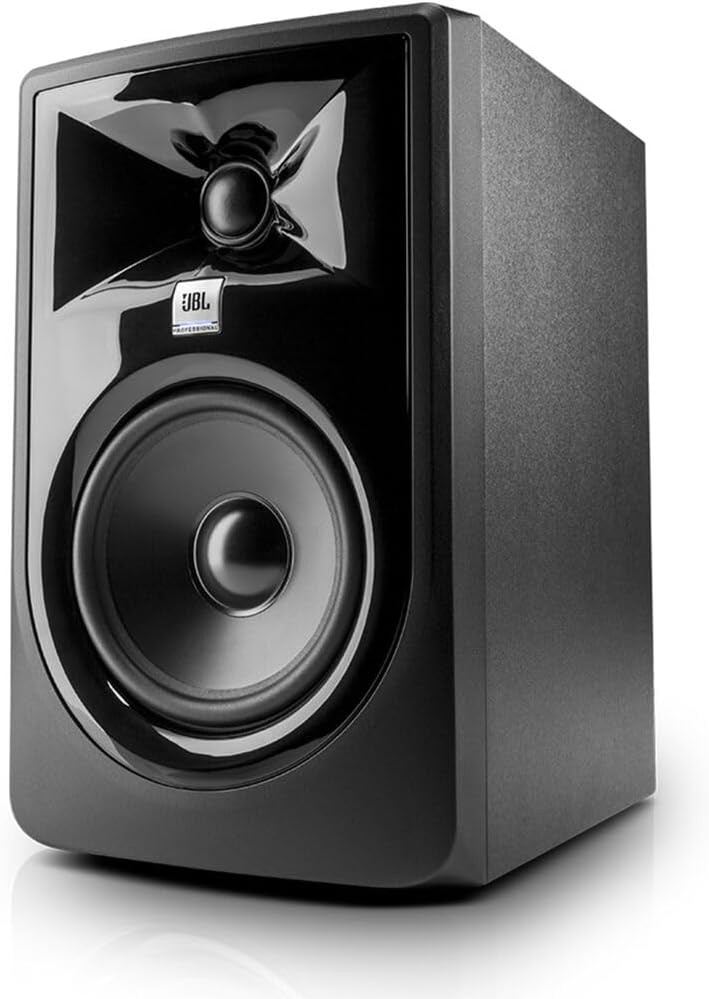
The JBL 305P MkII monitors are renowned for their Image Control Waveguide which delivers precise stereo imaging across a wide listening area. This feature is crucial for producers who need to hear exactly where sounds are placed in the mix.
We may earn a commission when you buy through this link, at no additional cost to you.
With dual 41-Watt Class-D amplifiers, these speakers offer a powerful output that maintains clarity even at higher volumes. The 5-inch woofer and Slip Stream port work together to produce deep bass that helps in judging low-frequency balance accurately.
Users appreciate the Boundary EQ feature which helps adapt the monitors to different room placements without needing external equalization. The robust MDF enclosure ensures minimal resonance interference which contributes to a cleaner sound reproduction overall.
These monitors are an excellent choice for serious producers and podcasters seeking professional-grade accuracy. They provide a reliable platform for creating mixes that translate well to other playback systems and environments.
Patented waveguide technology ensures immersive sound and a wide sweet spot for accurate mixing at various angles.
Built with decades of expertise and rigorously tested for reliability ensuring long-lasting performance in studio settings.
We may earn a commission when you buy through this link, at no additional cost to you.
The Edifier MR3 monitors stand out for their Hi-Res Audio certification which ensures a flat response across a wide frequency range. This makes them suitable for critical listening tasks where detail and accuracy are paramount for production work.
We may earn a commission when you buy through this link, at no additional cost to you.
Equipped with Bluetooth support for multi-point connections these speakers offer versatile usage scenarios for both studio work and casual entertainment. The EDIFIER ConneX app allows users to fine-tune sound settings remotely for a personalized listening experience.
Despite their compact size and affordable price point these monitors deliver a rich full-range sound thanks to their 3.5-inch drivers and 1-inch tweeters. The MDF cabinet helps reduce distortion which is essential for maintaining audio integrity during editing.
Ideal for content creators and music enthusiasts this monitor offers a blend of performance and convenience. It bridges the gap between professional monitoring and everyday listening with ease and flexibility for various needs.
Delivers a flat response from 52Hz to 40kHz ensuring precise monitoring for music creation and detailed listening.
The ConneX app provides in-depth adjustments and personalized EQ control to tailor sound to your preferences.
We may earn a commission when you buy through this link, at no additional cost to you.
The PreSonus Eris E7 XT features a large 6.55-inch woven composite woofer that delivers deep low-frequency response ideal for full-range monitoring. The innovative EBM Waveguide provides a wide sweet spot and solid imaging which is critical for accurate mix decisions.
We may earn a commission when you buy through this link, at no additional cost to you.
It comes bundled with Studio One Prime and Studio Magic plug-in suite offering over $1000 worth of production software to get started immediately. Acoustic tuning controls allow you to tailor the monitor to your space ensuring accuracy regardless of room conditions.
While the high frequencies are smooth and detailed the bass can be extended further with a companion subwoofer if needed. The inclusion of professional software adds significant value making it a compelling package for new and experienced producers alike.
This model is highly recommended for those seeking professional quality with a flexible design. Its combination of acoustic performance and software integration makes it a top choice for building a productive studio environment efficiently.
Innovative waveguide yields a wide sweet spot and solid imaging for better stereo perception and mixing accuracy.
Comes with Studio One Prime and plugins offering immediate access to professional tools for music production.
We may earn a commission when you buy through this link, at no additional cost to you.
The Yamaha HS5 monitors are celebrated for their emphasis on sonic purity without any coloring of the original sound. This neutrality makes them a standard choice in many professional studios where accurate translation is the primary goal for every mix.
We may earn a commission when you buy through this link, at no additional cost to you.
With a 5-inch cone woofer and a 1-inch dome tweeter these speakers offer a frequency response that ranges from 54Hz to 30kHz. The bi-amp system provides ample power ensuring dynamic range and clarity even during loud playback sessions.
The room control switch allows for basic adaptation to different acoustic environments which helps maintain consistency across different studio setups. The classic design and robust build quality have earned these monitors a reputation for durability and reliability over time.
Producers who prioritize honesty in sound reproduction will find the HS5 to be an excellent investment. They provide a trustworthy reference point that ensures your mixes sound good on a variety of other systems and devices.
Monitors emphasize original sound without alterations ensuring your mixes translate accurately to other systems.
Simple control adjusts sound to suit your room acoustics helping maintain consistent monitoring conditions.
We may earn a commission when you buy through this link, at no additional cost to you.
The Ortizan C7 monitors bring professional monitoring capabilities to a highly accessible price point making them ideal for beginners. They feature a carbon fiber driver and silk dome tweeter that work together to provide precise and clean sound output for tracking.
We may earn a commission when you buy through this link, at no additional cost to you.
Bluetooth 5.3 connectivity ensures stable wireless streaming while balanced TRS inputs allow connection to professional audio interfaces. The built-in 24-bit DAC captures digital audio directly minimizing signal loss and maximizing sound fidelity for optimal performance during creation.
Although they lack some features of higher-end models these speakers deliver a flat curve required by monitor speakers through professional tuning. This ensures balanced sound across frequencies without modification or enhancement which is essential for accurate reference monitoring.
For those working with limited budgets or needing a secondary pair of speakers these monitors offer great value. They enable creativity and talent to shine in small spaces without compromising on the basic requirements of studio-quality audio.
Built-in 24-bit DAC minimizes signal loss during conversion for top audio performance in digital workflows.
Balanced TRS and AUX inputs facilitate simultaneous connections of different audio sources for flexible workflows.
We may earn a commission when you buy through this link, at no additional cost to you.
The KALI AUDIO LP-6 V2 is designed to emit sounds exactly as they appear in your mix without alterations or boosts. Its advanced DSP system ensures a flat frequency response which is vital for producers looking for honest feedback on their work.
We may earn a commission when you buy through this link, at no additional cost to you.
With 80 watts of bi-amped power this monitor delivers loudness up to 115dB while maintaining clarity and low distortion. The front port design minimizes turbulence which reduces chuffing and hissing for a cleaner listening experience at any volume level.
An updated Boundary EQ feature allows high-quality audio output regardless of placement whether on a stand against a wall or on your desk. This adaptability ensures you can achieve accurate mixes in various room configurations without needing expensive acoustic treatment.
This monitor is a strong contender for those seeking professional performance without a premium price tag. Its robust build and accurate sound reproduction make it a reliable tool for music production and critical listening tasks daily.
Features 12dB noise reduction and low distortion upgrades for clear sounds without chuffing or hissing.
Front port lets air exit at uniform velocity to minimize turbulence and ensure consistent sound output.
We may earn a commission when you buy through this link, at no additional cost to you.
The Edifier MR5 uses a 3-way active crossover system with separate drivers for woofer mid and tweeter to ensure detailed audio reproduction. This design allows for a wider frequency response and better separation of instruments which is crucial for complex mixes.
We may earn a commission when you buy through this link, at no additional cost to you.
Supporting Hi-Res Audio with LDAC wireless streaming these speakers deliver crystal-clear sound that preserves detail in high-resolution files. The EDIFIER ConneX App provides advanced room compensation features such as Low Cut-Off and Acoustic Space presets for tailored sound.
With 110W RMS Class D amplifier power these monitors can fill mid-sized rooms while maintaining clarity. The dimpled tweeter waveguide ensures consistent sound quality across a wider listening area making collaboration easier during production sessions.
Ideal for producers who need accurate sound across a broad spectrum these monitors offer versatility and power. Their combination of wired and wireless connectivity makes them suitable for modern workflows involving both professional gear and consumer devices.
Separate drivers for woofer mid and tweeter ensure accurate detailed audio reproduction across all frequencies.
Supports LDAC audio for crystal-clear high-resolution sound delivery over Bluetooth connections effortlessly.
We may earn a commission when you buy through this link, at no additional cost to you.
The Mackie CR4.5BT monitors combine studio-quality sound with a tone control and Bluetooth offering versatility for various listening scenarios. This makes them suitable not just for production but also for casual listening and gaming environments where coloration is acceptable.
We may earn a commission when you buy through this link, at no additional cost to you.
A location switch allows you to optimize the speakers for desktop or bookshelf placement which helps tailor the sound to your specific listening distance. This feature ensures better performance whether you are mixing close at hand or listening from across the room.
With inputs for audio interfaces consoles and PCs plus Bluetooth pairing these speakers offer exceptional connectivity. The built-in headphone output enables private monitoring without disturbing others which is convenient for shared spaces or late-night work sessions.
These monitors are perfect for creators who need a mix of accuracy and fun in their studio. They deliver enough fidelity for work while offering the flexibility to boost bass and sparkle for immersive entertainment experiences daily.
Shape the sound with a tone knob that boosts bass and adds sparkle for versatile listening needs.
Optimize for desktop or bookshelf mode to suit your specific placement and listening distance effectively.
We may earn a commission when you buy through this link, at no additional cost to you.
The Yamaha HS8 monitors are designed for large studios requiring extensive low-frequency response and power. With an 8-inch cone woofer they reach down to 38Hz ensuring you hear every detail in the low-end of your productions without compromise.
We may earn a commission when you buy through this link, at no additional cost to you.
The bi-amp system delivers 120W of high-performance power amplification providing the headroom needed for loud listening and detailed analysis. Large magnets in an Advanced Magnetic Circuit design ensure precise control of the driver for accurate sound reproduction.
Room control and high frequency attenuation switches allow you to adapt the sound to your specific environment easily. This flexibility ensures that your mixes translate well to other systems which is a key requirement for professional mastering and mixing work.
For producers needing the deepest reference sound available in this category these monitors are unmatched. They provide the power and accuracy required for high-end production and serve as a benchmark for audio quality in professional settings.
8-inch woofer delivers deep bass down to 38Hz ensuring no low-end details are lost in your mixes.
120W bi-amp system provides ample headroom for loud listening and detailed analysis of complex mixes.
We may earn a commission when you buy through this link, at no additional cost to you.
Selecting the right monitor requires considering several key factors to ensure they meet your specific production needs and room conditions.
Frequency response indicates the range of audio frequencies a monitor can reproduce accurately. For studio work look for a flat response to ensure your mixes translate well to other systems without coloration.
A wider range like 40Hz to 20kHz helps you hear both deep bass and high-frequency details which is essential for balanced mixing.
Driver size affects the monitor's ability to reproduce low frequencies. Larger woofers like 8-inch models deliver deeper bass while smaller ones like 5-inch are better for smaller rooms.
Choose a size that matches your room dimensions and the type of music you produce to avoid excessive bass that can muddy your mix.
Active monitors have built-in amplifiers making them easier to set up without needing external power amps. Look for Class D or Class AB amps depending on your power needs.
Adequate wattage ensures you can listen at comfortable volumes without distortion which is crucial for long working sessions in the studio.
Ensure the monitor supports balanced inputs like XLR or TRS to minimize noise and interference in your audio chain. Unbalanced RCA inputs are useful for connecting consumer devices.
Bluetooth and USB inputs add convenience for wireless playback or digital connections offering flexibility for various workflows and devices.
Controls like room EQ or bass cut help adapt the monitor to your specific room acoustics. This prevents standing waves and ensures a smoother frequency response.
Monitors with physical knobs or app-based tuning allow you to fine-tune the sound to reduce unwanted resonances caused by your environment.
Durable construction with MDF cabinets reduces cabinet resonance which can color the sound. Metal grilles and reinforced corners protect the unit during transport.
Investing in solid build quality ensures long-term reliability and consistent performance over years of daily use in your studio.
Determine your budget early to narrow down options that offer the best value for your specific needs. Entry-level models can provide accurate sound without breaking the bank.
Consider total costs including cables and stands as these add-ons can significantly impact the final price of your setup.
Some monitors come bundled with software like DAWs or plugins which can add significant value to your purchase. Check what is included with the hardware package.
Integrated tuning software allows for precise adjustments that are easier to manage than manual knobs and give you more control.
Position your monitors at ear level with the tweeters aligned to your head to ensure accurate high-frequency response. This helps reduce listening fatigue and ensures a clear stereo image during production sessions.
Use acoustic treatment like bass traps and panels to minimize room reflections that can color your sound. Placing monitors away from walls helps reduce bass buildup and improves overall clarity significantly.
Regularly dust the speakers and check cables for wear to maintain optimal performance. Keep the units powered off when not in use to prevent unnecessary heat buildup and extend their lifespan.
Active monitors generally offer better sound quality and convenience because they have built-in amplifiers matched to the drivers. This eliminates the need for external amps and reduces potential signal loss in your setup.
For small rooms under 150 square feet 5-inch monitors are usually sufficient. Larger rooms benefit from 6.5 or 8-inch models to fill the space with accurate bass response without distortion.
Ideally you should sit about 3 to 6 feet away from the monitors forming an equilateral triangle with your ears. This distance provides the best sweet spot for stereo imaging and clarity during mixing.
Calibration helps ensure the monitors produce a flat frequency response regardless of room acoustics. Using measurement tools or room correction software can help achieve accurate sound reproduction in any environment.
Most monitors require balanced inputs that standard laptop headphone jacks do not provide directly. Using an audio interface ensures you get balanced signals which reduce noise and improve sound quality significantly.
High-quality studio monitors can last many years if properly maintained. Avoid overheating and moisture exposure to ensure longevity and consistent performance over time.
We have reviewed ten top options ranging from affordable entry-level monitors to high-end professional models. Each offers unique strengths that cater to different needs and budgets for producers and audio engineers.
Prioritize sound accuracy and room fit over extra features when making your choice. Investing in monitors that help you hear every detail ensures your mixes translate well across different playback systems.
Check current availability and pricing before purchasing since these factors can change frequently. Make sure to review your specific requirements to find the perfect match for your studio environment.