
AGFRC 20A BLHeli_S DSHOT600 ESC
4.3Editor score
Damped Light Enabled Feature
Compact Lightweight Design
Multi Protocol Support
This guide compares the top ten ESCs for racing quadcopter builds to help you find the best performance and reliability for your next FPV racing drone.
Choosing the right electronic speed controller is critical for high-performance racing quads. These components manage motor power delivery and dictate throttle response accuracy during intense flight sessions.
We evaluated ten distinct ESC models based on firmware support, current handling capacity, and build quality. Our analysis focuses on reliability and compatibility with modern flight controllers used in FPV racing.
Each selection highlights specific strengths for budget or high-end builds. Prices and availability shift frequently so verify current listings before purchasing your next racing drone component set.
4.3Editor score
4.4Editor score

4.3Editor score
This comparison table outlines the key technical specifications for each selected ESC to facilitate easy side-by-side evaluation of power handling and protocol support.




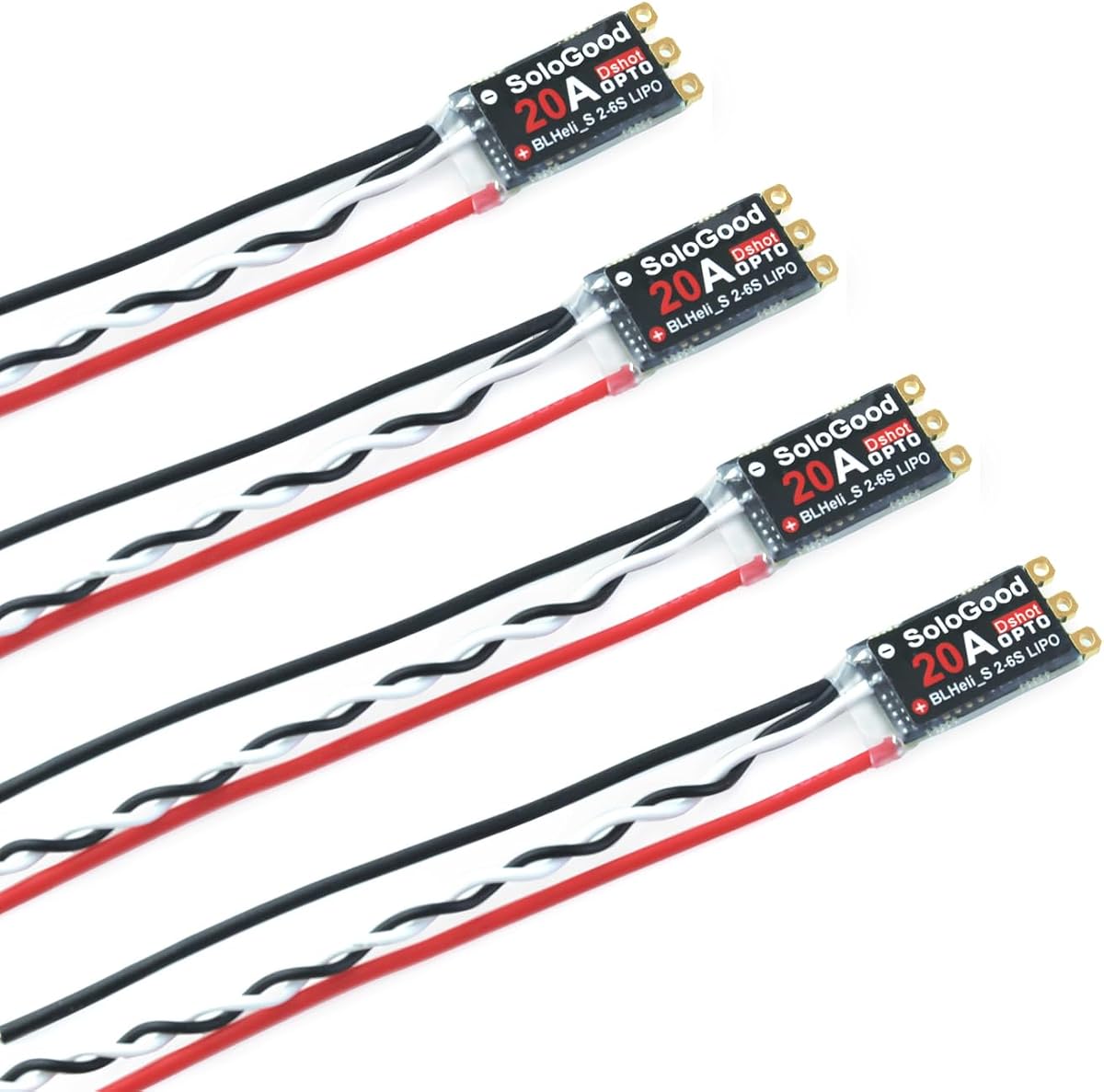
This ESC set delivers consistent performance for FPV racing with BLHeli_S firmware preinstalled. Users rate it highly for reliability and ease of configuration across multiple drone builds.
We may earn a commission when you buy through this link, at no additional cost to you.
The twisted pair throttle signal cable effectively minimizes electromagnetic interference during high-speed maneuvers. Its compatibility with fixed-wing and helicopters expands its utility beyond standard quadcopters.
It operates best on 2 to 4S battery setups which limits its use for extreme power builds. The lack of higher voltage tolerance means users must upgrade for larger frames.
Racers seeking affordable reliable speed controllers will find this kit excellent for standard builds. It offers a balanced combination of features and stability for competitive flying.
The twisted pair design ensures that throttle signals remain clean even when running high current through nearby power lines.
Owners can easily flash new versions via the signal cable to keep performance updated without removing the unit.
We may earn a commission when you buy through this link, at no additional cost to you.
Designed for FPV racing this ESC offers smooth precise control with a compact footprint ideal for tight builds. It handles burst currents effectively for aggressive throttle maneuvers.
We may earn a commission when you buy through this link, at no additional cost to you.
The DShot protocol support ensures fast responsive digital signals while muted mode reduces noise during flight. This combination makes it suitable for indoor or quiet outdoor racing events.
Without user ratings it is hard to gauge long term reliability compared to established brands. The lack of feedback means buyers must rely on manufacturer specs alone.
Pilot looking for a small reliable ESC for 2 to 4S builds should consider this option. It balances performance and size well for standard racing quadcopters.
DShot protocol allows for faster communication between flight controller and motor resulting in sharper throttle response times.
Despite small size the design manages heat efficiently to maintain stable output during extended high-load flight sessions.
We may earn a commission when you buy through this link, at no additional cost to you.
This 60A ESC provides powerful stable flight for racing drone using immersion gold PCB plating. It supports direct plug-in connections to eliminate soldering hassles during assembly.
We may earn a commission when you buy through this link, at no additional cost to you.
Users appreciate the large ESC pads which help manage heat and current resistance effectively. The DShot600 support ensures rapid signal transmission critical for high-speed racing.
The high amperage may be unnecessary for smaller lightweight frames that do not draw significant power. This could lead to extra weight where lower current units would suffice.
Freestyle pilots needing robust power for 6S batteries will find this unit reliable and efficient. Its design prioritizes durability and ease of use for complex builds.
Direct plug-in connectors reduce soldering errors and save time when integrating with compatible flight controller stacks.
Immersion gold plating enhances resistance to high currents and heat ensuring long-term stability under stress.
We may earn a commission when you buy through this link, at no additional cost to you.
The MAD AMPX ESC features new core software for improved throttle response suitable for various flight controllers. It handles 2 to 6S LiPo batteries with 40A continuous current output.
We may earn a commission when you buy through this link, at no additional cost to you.
Its adaptive default settings like auto-adjusting timing meet almost all applications without requiring complex configuration changes. The signal line design effectively reduces crosstalk for cleaner control.
It requires a signal frequency above 600Hz which may limit compatibility with older receivers. Users must verify their flight controller meets this requirement before purchase.
Pilot seeking versatile controllers with strong signal integrity will appreciate this unit. It balances power handling and adaptability for mid-range racing and freestyle builds.
Auto-adjusting timing optimizes motor performance for different props and voltages automatically reducing manual tuning effort.
Reduced crosstalk ensures throttle commands remain accurate even during high current draw or noisy motor operations.
We may earn a commission when you buy through this link, at no additional cost to you.
This ESC is designed for competition FPV drones with damped light enabled for sensitive motor control. It supports a wide range of protocols including DShot600 and PWM.
We may earn a commission when you buy through this link, at no additional cost to you.
Its hardware PWM drive motor ensures low noise and smooth throttle response which is essential for precision flying. The compact size and light weight save space in tight frames.
While effective for standard builds it may lack the robustness needed for extreme high-power racing. Users should match this to appropriate battery and motor setups.
Budget-conscious racers looking for reliable BLHeli_S support will find this model excellent. It delivers solid performance for the price with essential racing features.
Damped light reduces motor speed more effectively and increases sensitivity for precise control during tight maneuvers.
Support for multiple protocols ensures compatibility with various flight controllers and receivers regardless of preference.
We may earn a commission when you buy through this link, at no additional cost to you.
Designed for high-power FPV drones this ESC supports 4 to 8S LiPo with 160A continuous current. A built-in ammeter allows real-time telemetry transmission for flight data monitoring.
We may earn a commission when you buy through this link, at no additional cost to you.
The dual-pad power supply and metal heat sink ensure stable high-power output during intense flight sessions. These features extend service life by managing thermal stress effectively.
Its high cost and size make it impractical for standard racing quads that do not require such extreme power. It is best suited for heavy-lift or industrial FPV applications.
Pilots requiring maximum reliability under extreme loads will appreciate this heavy-duty unit. It provides comprehensive telemetry and thermal management for demanding setups.
Real-time updates on motor speed and temperature allow pilots to monitor health and avoid overheating during flights.
The metal heat sink dissipates heat faster than standard plastic enclosures keeping electronics stable during prolonged use.
We may earn a commission when you buy through this link, at no additional cost to you.
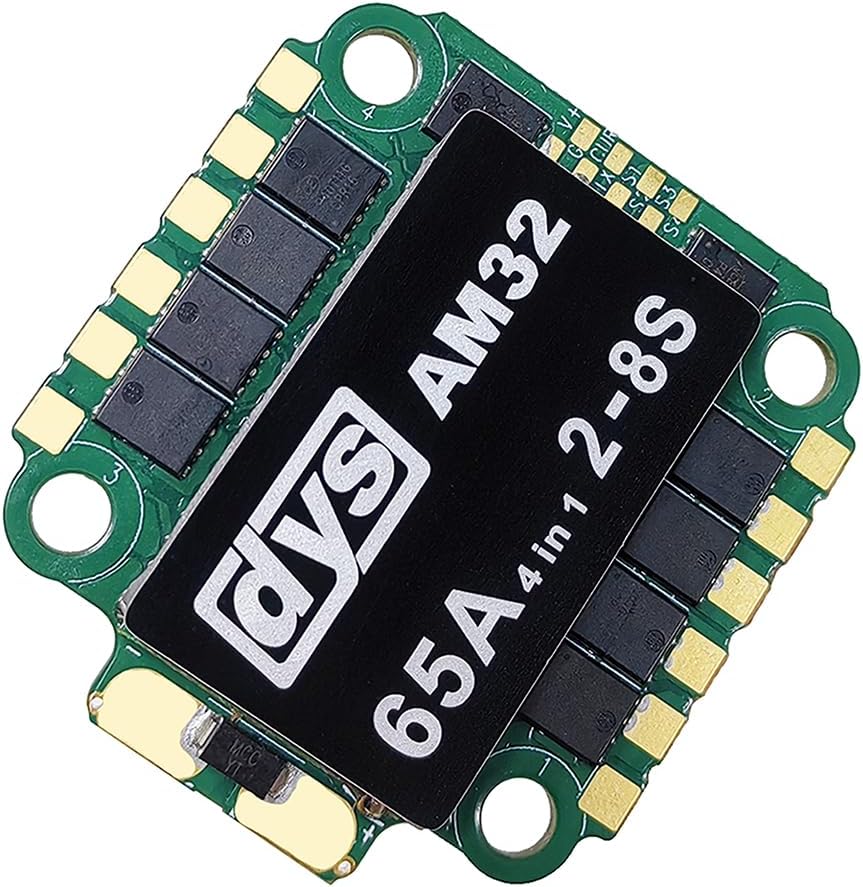
This ESC uses premium MOS for a performance improvement over previous generations. It runs on 32-bit AM32 firmware providing precise control and robust performance for FPV freestyle.
We may earn a commission when you buy through this link, at no additional cost to you.
The standard 30.5 by 30.5mm installation holes fit various drone frames for convenient installation. Users can easily swap it into existing builds without frame modifications.
User ratings are currently low which may indicate potential reliability issues in specific batches. New adopters should consider this factor when planning critical racing setups.
Pilots seeking modern AM32 features will find this unit attractive for future-proofing builds. It balances wide voltage support with standard mounting convenience.
The 32-bit processor allows for more complex control algorithms and better performance tuning than 8-bit alternatives.
Upgraded MOS components provide 15 percent better efficiency reducing heat and increasing overall reliability.
We may earn a commission when you buy through this link, at no additional cost to you.
This all-in-one stack combines flight controller and ESC for simplified racing builds. It supports up to 8 motors with 70A continuous current and dual BEC outputs for power.
We may earn a commission when you buy through this link, at no additional cost to you.
Features like angled solder pads reduce welding difficulty and WS2812 LED support allows for controlled lighting. The STM32 processor ensures reliable flight data recording via black box.
Integrating everything into one unit increases complexity for repair if a single component fails. Users must weigh convenience against modularity when choosing this stack.
Racers wanting a streamlined build will appreciate the integrated design and feature set. It is best for those comfortable with complex soldering and setup.
Dual BEC outputs provide independent power for video transmitters and controllers ensuring consistent voltage stability.
Angled solder pads reduce the difficulty of wiring connections making assembly faster and more reliable.
We may earn a commission when you buy through this link, at no additional cost to you.
This ESC uses hardware generated motor PWM to improve throttle response and reduce noise during operation. It supports both Bluejay and BLHeli-S firmware for flexible protocol options.
We may earn a commission when you buy through this link, at no additional cost to you.
The EFM8BB21 MCU runs at 50 MHz providing fast processing for accurate motor control. Its dimensions make it suitable for high-speed racing level multirotors weighing less.
It is optimized for 3S to 6S batteries which may limit use on 8S long range builds. Users should check battery voltage compatibility before purchasing.
Pilots prioritizing smooth throttle and low noise will find this unit effective. It balances hardware performance and firmware flexibility for standard racing needs.
Hardware PWM allows for more precise timing than software methods leading to smoother motor operation and less jitter.
The dedicated 3-in-1 driver IC ensures smoother starting and better overall motor management across flight conditions.
We may earn a commission when you buy through this link, at no additional cost to you.
This ESC features ultra-high efficiency conversion to reduce losses and extend flight time during sessions. The multi-layer PCB design increases over-current capability effectively dissipating heat.
We may earn a commission when you buy through this link, at no additional cost to you.
Its AT32F421 processor supports PWM frequencies up to 96 kHz ensuring fast and responsive motor control. Standard 30.5mm mounting holes make it easy to install in various frames.
Mid-level user ratings suggest performance may vary across batches or specific configurations. Buyers should test carefully after installation to ensure consistent output.
Pilot looking for efficiency and standard compatibility will find this unit a practical choice. It balances modern processor tech with reliable current handling for racing drones.
Ultra-high efficiency conversion minimizes energy loss to heat keeping motors and ESC cooler during intense flights.
Multi-layer design enhances current flow stability and heat distribution to prevent component failure under stress.
We may earn a commission when you buy through this link, at no additional cost to you.
Selecting the right ESC requires balancing current capacity, protocol support, and build quality to match your specific racing or freestyle requirements.
Current rating determines how much power the ESC can handle without overheating or failing. For racing quads ensure the continuous rating exceeds your motor peak draw to avoid cutoffs during high-speed maneuvers.
Always choose an ESC with a safety margin above your calculated motor peak current for reliable performance under stress.
Modern BLHeli_S or Bluejay firmware offers better features like Damped Light and faster signal processing. Verify that the ESC supports updates to ensure long-term compatibility with new flight controllers.
Prioritize models with updatable firmware to keep your racing drone secure and optimized for future protocols.
Protocols like DShot600 ensure rapid digital communication between flight controller and motors. Using the highest supported protocol minimizes latency for more precise control during high-speed racing.
Check that your flight controller and ESC both support the same protocol to avoid signal errors or unresponsive motor control.
Standard 30.5mm mounting spacing fits most common racing frames. Verify the physical dimensions of the ESC stack to ensure it fits within your frame without interfering with other components.
Measure your frame stack height before purchasing to avoid assembly issues or the need for spacers.
Direct plug-in connectors simplify installation and reduce the risk of soldering errors. However traditional wire leads offer more flexibility for custom routing in unique frame configurations.
Choose the connector type that best matches your skill level and assembly preferences for a clean build.
Effective cooling is critical for maintaining performance during long flights. Look for ESCs with metal heat sinks or thick PCB traces to manage temperature under heavy current loads.
Avoid models with minimal heat management if you frequently fly in hot environments or at full throttle.
Ensure the ESC supports your intended LiPo battery configuration such as 2S to 6S. Operating outside this range can damage the ESC or cause immediate failure during flight.
Match the voltage range to your battery selection to protect your investment and ensure safe operation.
Some advanced ESCs support telemetry for real-time monitoring of current and temperature. This data helps in diagnosing issues and optimizing flight performance before failures occur.
Consider telemetry capability if you want deeper insight into your drone power performance and health.
Begin by matching your flight controller throttle protocol to the ESC configuration. Use software like Betaflight or BLHeli Configurator to set the correct protocol such as DShot600.
Secure all connections with heat shrink tubing to prevent short circuits. Ensure wire leads do not rub against motor mounts or propellers during high-speed operation.
Regularly inspect solder joints for cracks or discoloration after crashes. Cleaning dust from the ESC surface maintains airflow and prevents overheating during subsequent flights.
BLHeli_S offers more advanced features and efficiency compared to the older BLHeli firmware. It supports Damped Light which allows for smoother motor control and reduced noise during flight. This update is standard for modern racing quadcopters today.
Most racing frames use a 4-in-1 ESC to save weight and space on the flight stack. It simplifies wiring by centralizing motor connections. Separate ESCs are generally reserved for custom or multi-rotor builds.
Yes using an ESC with higher current rating provides a safety margin against overheating. It does not force more current than the motors draw naturally. This approach ensures reliability during aggressive racing maneuvers.
Connect the ESC to a USB programmer or use the signal wire method supported by some models. Open BLHeli Suite software and follow prompts to upload the new version. Always backup old settings before proceeding.
Overheating can cause power cutoffs or permanent damage to internal components. Proper airflow and correct sizing are key to preventing this issue. If overheating occurs reduce throttle duration or check motor resistance.
Digital protocols like DShot are now standard for racing due to speed and precision. Analog PWM is mostly obsolete but still supported for legacy receivers. Modern controllers prioritize digital signal integrity.
This guide highlights ten diverse ESC options ranging from budget-friendly to high-performance units. Each model offers unique advantages for different frame sizes and racing styles.
Prioritize current capacity and protocol compatibility to ensure your motors receive clean power. Investing in updatable firmware extends the lifespan of your quadcopter significantly.
Prices and stock levels change quickly so confirm all details before finalizing your order. Regular updates keep your racing drone competitive and reliable in the fast-paced FPV community.