
HGLRC Mini M100 GPS Module
4.6Editor score
Ultra Compact Size
Ceramic Antenna
3.3V to 5V Input
This guide compares the top GPS modules for drones to help you choose the right positioning system for your FPV, fixed-wing, or racing drone build.
Finding the right GPS module for your drone is essential for safe flights and accurate positioning. Modern modules offer fast satellite locks and reliable return to home features.
We compared ten top rated GPS modules based on chip generation, antenna quality, and flight controller compatibility. Each product was evaluated for performance and ease of use.
Each pick highlights key specs and real world benefits for different drone types. Prices and availability change frequently so verify details before purchasing your next upgrade.
4.6Editor score
4.8Editor score

4.0Editor score
The following table compares key specifications across all ten GPS modules. Use this overview to quickly identify which unit fits your flight controller and drone size requirements.




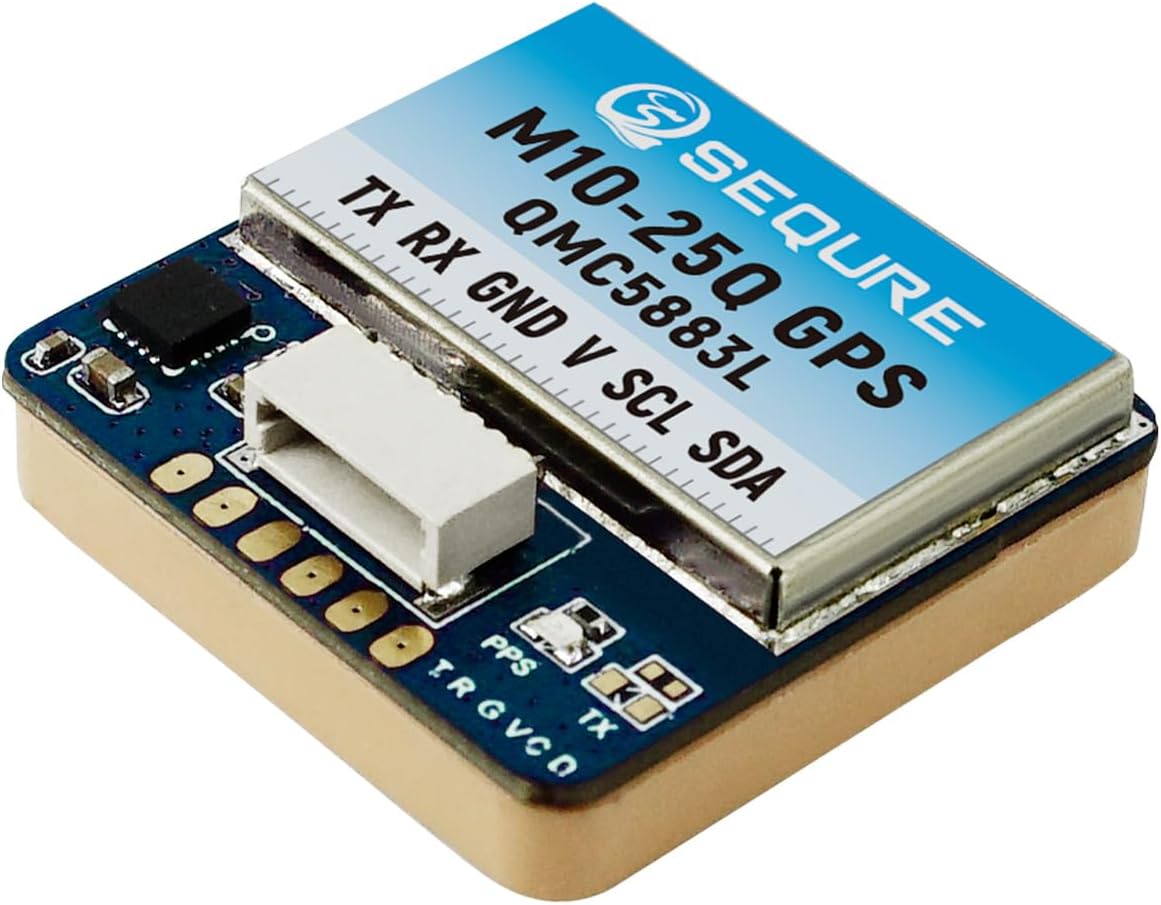
The SEQURE M10-25Q FPV GPS Module stands out as a top performer for racing drones. It features a 10th generation chip for rapid positioning and supports multiple GNSS systems for better accuracy.
We may earn a commission when you buy through this link, at no additional cost to you.
Its ceramic antenna and expanded PCB design ensure stable signal reception even in challenging environments. The 10Hz output frequency provides real time updates for precise navigation and return to home functions.
While it is optimized for larger UAVs, the dual protocol support makes it versatile for various flight controllers. Users appreciate the easy installation options whether soldering or plug and play.
This module is ideal for pilots needing reliable failsafe features without compromising weight. Its balance of speed and precision makes it a strong choice for serious FPV builds.
Supporting GPS GLONASS BDS and GALILEO allows the module to track more satellites for better lock stability.
The externally expanded PCB and ceramic antenna work together to minimize interference and maximize satellite reach.
We may earn a commission when you buy through this link, at no additional cost to you.
The HGLRC M100 Pro is engineered for FPV fixed wing UAVs requiring precise navigation. It uses a 10th generation chip with expanded channels to improve satellite tracking in diverse regions.
We may earn a commission when you buy through this link, at no additional cost to you.
Its QMC5883L compass ensures accurate heading identification which is critical for stable flight paths. The manufacturer emphasizes direct support and reliability for users needing quick assistance.
While primarily designed for fixed wing platforms the module offers robust performance for long range flights. The 120 channel reception expands the search area for faster locking.
Pilot choosing this module benefit from trusted craftsmanship and dedicated help lines. It is a solid option for those prioritizing consistent performance in wing based drone projects.
With 120 channels the module can scan more satellites quickly to establish a secure connection for flight.
Users can reach the original HGLRC factory for help ensuring issues are resolved within hours not days.
We may earn a commission when you buy through this link, at no additional cost to you.
The HGLRC M100-5883 offers a lightweight solution for FPV fixed wing UAVs. Its upgraded chip supports GPS Galileo and BDS modes for fast positioning in any area.
We may earn a commission when you buy through this link, at no additional cost to you.
Weighing just 7.73 grams it adds minimal burden to the aircraft while providing accurate direction and positioning data. The ceramic antenna is carefully modulated for stable signal reception.
The module excels in rapid satellite acquisition which reduces pre flight wait times. Its small size fits well in tight drone configurations without adding drag.
For pilots needing a balance of speed and weight this module delivers reliable navigation. It is a practical choice for agile fixed wing builds where performance matters.
Supporting multiple satellite systems ensures faster locks and better redundancy during flight operations.
The ceramic antenna is tuned to maximize signal quality while keeping the physical size minimal.
We may earn a commission when you buy through this link, at no additional cost to you.
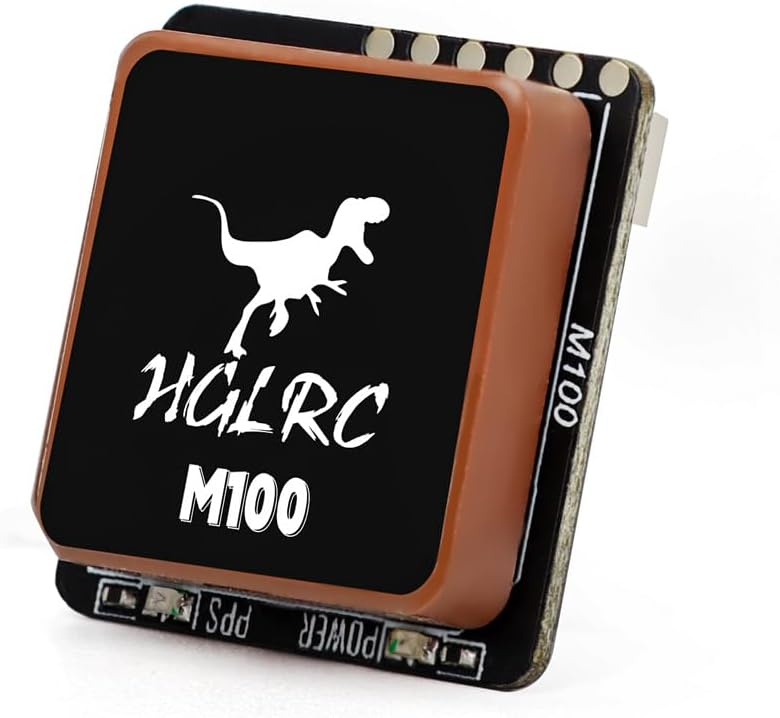
The HGLRC Mini M100 provides an affordable option for 2 to 7 inch FPV racing drones. It supports UBLOX protocols and includes a ceramic antenna for reliable positioning.
We may earn a commission when you buy through this link, at no additional cost to you.
Its compact design allows integration into tight spaces common in racing frames. The power supply compatibility from 3.3V to 5V makes it versatile for various battery setups.
Onboard POWER and PPS indicator lights give users a clear view of the working status. This simplicity reduces troubleshooting time during setup.
Pilots looking for a cost effective GPS module without sacrificing basic reliability will find this appealing. It meets essential needs for small scale racing projects.
Indicator lights let you confirm power and positioning status at a glance during flight prep.
Accepting both 3.3V and 5V inputs simplifies wiring and reduces need for extra voltage regulators.
We may earn a commission when you buy through this link, at no additional cost to you.
The JeeFly M8N GPS Module delivers high sensitivity navigation for complex missions. It receives signals from GPS GLONASS BeiDou and QZSS simultaneously for 26 plus satellite tracking.
We may earn a commission when you buy through this link, at no additional cost to you.
Designed for Pixhawk and PX4 flight controllers it offers precise 0.5m accuracy under ideal conditions. The 10Hz refresh rate supports real-time autonomous flights and return-to-home functions.
Its built-in compass and LED status indicators simplify orientation setup. The module operates across a wide temperature range ensuring reliability in diverse weather.
While it requires a firmware update for some Pix models it provides premium precision for robotics and autonomous drones. It is a top choice for advanced flight systems.
With 72 channels the M8N chip locks onto satellites quickly for consistent and accurate data.
Compatibility with Pixhawk and PX4 ensures stable communication for professional-grade autonomous flights.
We may earn a commission when you buy through this link, at no additional cost to you.
The Readytosky M10 GPS Module is specially designed for Pixhawk 2.4.8 flight controllers. It features onboard FLASH to save configurations ensuring settings remain after power cycles.
We may earn a commission when you buy through this link, at no additional cost to you.
Positioning accuracy reaches 1.5m CEP in ideal environments providing reliable navigation data. The low power consumption helps extend flight time for electric aircraft.
Users must note this GPS works exclusively with compatible Pixhawk controllers. It cannot function with other flight systems limiting its broader application.
For builds centered around Pixhawk 2.4.8 this module offers tailored performance and convenience. It ensures precise returns and stable waypoint navigation without configuration loss.
Flash memory retains your customized settings so you do not need to reset them after reboot.
Optimized for Pixhawk 2.4.8 it delivers seamless integration for specific flight controller setups.
We may earn a commission when you buy through this link, at no additional cost to you.
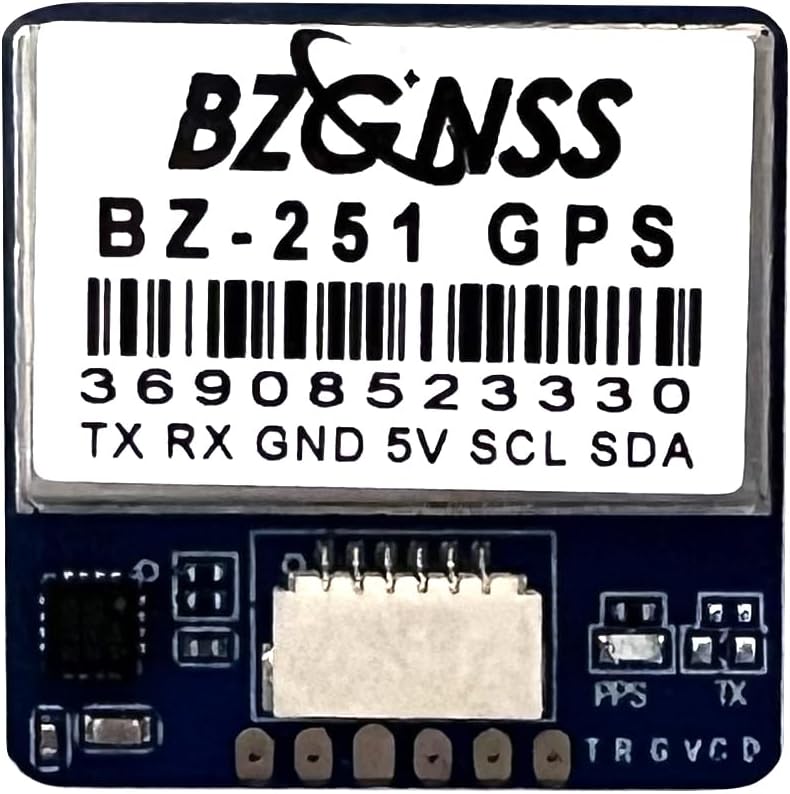
The BZGNSS BZ-251 Dual Protocol GPS Module excels in failsafe return to home functions. Its 10th-generation u-blox M10 chipset ensures stable positioning even in complex environments.
We may earn a commission when you buy through this link, at no additional cost to you.
The oil-sprayed ceramic antenna prevents scratching and oxidation for long-term durability. With GPS GLONASS and BDS joint positioning it offers 1.5m accuracy for confident navigation.
Supporting both NMEA and UBX protocols it adapts to various flight controller requirements. The 10Hz refresh rate delivers real time data for critical rescue scenarios.
Pilots prioritizing aircraft safety and reliability will appreciate its robust construction. It is a top contender for fixed-wing and RC aircraft where consistent return is essential.
Special oil-spraying process protects the antenna from wear ensuring stable signals over time.
Provides essential data to flight controllers for reliable automatic return functions during flight emergencies.
We may earn a commission when you buy through this link, at no additional cost to you.
The BZGNSS BZ-251 FPV GPS Module is tailored for racing and long-range fixed-wing flights. Its dual protocol system ensures versatile connectivity with F405 and F722 controllers.
We may earn a commission when you buy through this link, at no additional cost to you.
A built-in battery eliminates issues from poor connections adding reliability during intense flight sessions. The ultra-compact design reduces drag and weight for better performance.
Engineered for rapid locking it minimizes wait time before takeoff. Even in challenging environments it maintains dependable location data for autonomous navigation.
Racers and long-range pilots benefit from its simple installation and precise data. It balances speed with essential navigation features for competitive drone applications.
The included battery ensures consistent power to the module even if the main drone connection is loose.
Advanced GPS technology ensures the module locks onto satellites quickly for immediate flight readiness.
We may earn a commission when you buy through this link, at no additional cost to you.
The AERO SELFIE FK-C1 M9 GPS Module offers an ultra compact solution for space-constrained FPV drones. Its M9 chipset supports GPS GLONASS Galileo and BeiDou for enhanced positioning.
We may earn a commission when you buy through this link, at no additional cost to you.
Weighing only 7 grams and measuring 20x20mm it fits easily into small frames. The IST8310 compass provides precise heading data for complex navigation conditions.
LED indicators offer real-time feedback on fix status with a 1Hz blink rate for 3D GNSS. This module consumes just 80mA making it energy efficient.
For pilots needing a lightweight and small GPS unit this module delivers reliable performance. It is well suited for racing and agile drone builds with tight space.
With only 80mA consumption it preserves battery life for longer flight times on smaller craft.
The IST8310 compass ensures accurate directional data even in urban canyons or forests.
We may earn a commission when you buy through this link, at no additional cost to you.
The FK-D1 GNSS Module provides upgraded 10th generation performance for drones and robotics. It tracks up to 32 satellites with a 10Hz update rate for smooth motion tracking.
We may earn a commission when you buy through this link, at no additional cost to you.
Its UART interface and compatibility with INAV Betaflight and Ardupilot make it versatile. The integrated QMC5883L sensor enhances orientation accuracy for reliable control.
Built-in flash memory saves user settings eliminating the need for reconfiguration after power cycles. The 25x25x4mm antenna ensures optimal reception in urban or natural cover.
This module suits developers needing seamless integration into various systems. It delivers precise positioning with minimal setup effort for robotic and flight applications.
Onboard flash retains configuration data so you avoid resetting parameters after each power cycle.
Compatible with multiple flight controllers it adapts to INAV Betaflight Ardupilot and PX4 systems.
We may earn a commission when you buy through this link, at no additional cost to you.
Selecting a GPS module requires evaluating chip type antenna quality and compatibility with your flight controller. These factors determine positioning accuracy and overall reliability during flights.
Newer chips like the 10th-generation u-blox M10 offer faster acquisition and better sensitivity in crowded environments. Look for modules that support multiple GNSS systems to maximize satellite visibility.
Prioritize the latest chip generation for improved lock times and stability.
Ceramic antennas with expanded PCB designs provide more stable signal reception compared to standard options. The physical finish like oil-spraying can affect durability in outdoor conditions.
Choose modules with high-quality ceramic antennas for consistent performance.
Verify whether the module supports your flight controller protocol such as NMEA or UBX. Some units are specific to Pixhawk or UBLOX systems which limits flexibility.
Ensure the module supports your flight controller protocols for seamless integration.
A built-in compass like the QMC5883L helps with heading accuracy and waypoint navigation. Modules without a compass may require external components increasing complexity.
Select a unit with an integrated compass for reliable directional control.
For racing or fixed-wing drones a compact and lightweight module is crucial to maintain performance. Larger modules might add unnecessary drag or weight affecting flight time.
Check dimensions and weight to match your aircraft design requirements.
A 10Hz update rate ensures real-time positioning for autonomous and failsafe functions. Higher rates provide smoother navigation especially during high-speed maneuvers.
Look for at least 10Hz refresh rates for responsive navigation.
Some modules offer plug-and-play connectors while others require soldering. Consider your technical skill level and desired ease of setup when choosing.
Decide between plug-and-play and soldering options based on your skill level.
Weather-resistant antennas and wide temperature operating ranges ensure reliability across seasons. Look for protective treatments that prevent oxidation or damage over time.
Opt for durable designs that withstand varied environmental conditions.
Install the module on the upper side of your drone to avoid metal interference from batteries or motors. Secure it firmly using included mounting hardware or adhesive pads to prevent movement during flight.
Connect the module to your flight controller using the appropriate UART or serial ports. Ensure wiring follows the manufacturer diagram for correct power and data signal alignment.
Periodically check the antenna for physical damage and ensure it is positioned away from other electronic noise sources. Regular firmware updates may improve performance or compatibility for your system.
GPS refers specifically to the United States satellite system while GNSS includes multiple global constellations like GLONASS Galileo and BeiDou. Using GNSS provides more satellites for better accuracy.
The compass provides heading data which helps the drone know which direction it is facing. This is crucial for return to home and autonomous waypoint navigation.
Modern modules with 10th-generation chips can lock in seconds in open skies. Older units or dense environments might take longer to acquire enough satellites.
No compatibility depends on supported protocols and wiring. Verify NMEA UBX support and check if your controller needs UART or I2C interfaces.
Yes most modules weigh between 5 to 20 grams. For racing or small drones this should be factored into overall weight budget for performance.
RTH uses GPS coordinates to bring the drone back automatically when battery is low or signal lost. It requires accurate GPS data and proper flight controller setup.
Avoid physical damage to the ceramic surface and keep it away from conductive materials. Regularly check connections to ensure stable signal transmission during flights.
Most modules connect to flight controllers rather than directly to goggles. They provide positioning data that flight software can share via telemetry links if configured.
This guide highlights ten GPS modules ranging from budget-friendly to high-end options for various drone builds. Top picks include the SEQURE M10-25Q and HGLRC Mini M100 for performance and value.
Prioritize chips generation antenna quality and controller compatibility to ensure reliable positioning. Consider size and update rate if your drone relies on fast autonomous returns.
Prices and availability shift frequently so confirm current specs before purchasing. Choosing the right module ensures safer flights and better control for your FPV or fixed-wing aircraft.