
EBOOT 30 Pieces Photoresistor
4.6Editor score
Thirty pieces included
5mm diameter size
High voltage tolerance
This guide compares the top light sensor for Arduino options to help you choose the right module for your electronics projects and automation needs.
Selecting the right light sensor for Arduino projects can significantly impact the functionality and accuracy of your embedded systems. Whether you are building a smart home device or an industrial automation tool, understanding the nuances of photoresistors and digital modules is essential for success.
We have evaluated ten distinct products based on their specifications, user ratings, and compatibility with popular microcontrollers like Arduino and ESP32. Our comparison focuses on ease of integration, sensitivity adjustment capabilities, and overall reliability in diverse lighting conditions.
Each pick in this list highlights specific strengths such as cost-effectiveness, precision, or ease of use for beginners. Please note that product availability and pricing can change frequently, so verifying current details before purchase is always recommended for the best experience.
4.6Editor score

4.5Editor score
5.0Editor score
This side-by-side comparison outlines the key specifications and features of each selected light sensor module to help you make an informed decision for your specific application requirements.



This module offers a professional grade solution for light intensity measurement using the original ROHM BH1750FVI chip. It holds a solid rating from users who value precision and reliability in their ambient light sensing projects.
We may earn a commission when you buy through this link, at no additional cost to you.
The compact size allows it to fit easily into tight spaces on a breadboard or custom PCB. Its digital output eliminates the need for analog-to-digital conversion on the microcontroller side, simplifying code and improving accuracy across different lighting conditions.
While it requires external pullup resistors for the I2C bus, this is a standard practice for many digital sensors. The cost is slightly higher than basic photoresistors but the improved consistency and calibration-free operation justify the investment for serious projects.
This module is ideal for hobbyists and engineers who need accurate lux readings without complex calibration. It is highly recommended for projects like automatic brightness control or environmental monitoring where data integrity is crucial.
The BH1750FVI chip provides high-resolution digital output that directly maps to lux levels without external analog processing.
Its small footprint ensures it can be mounted on crowded PCBs or within small enclosures without hindering other components.
We may earn a commission when you buy through this link, at no additional cost to you.
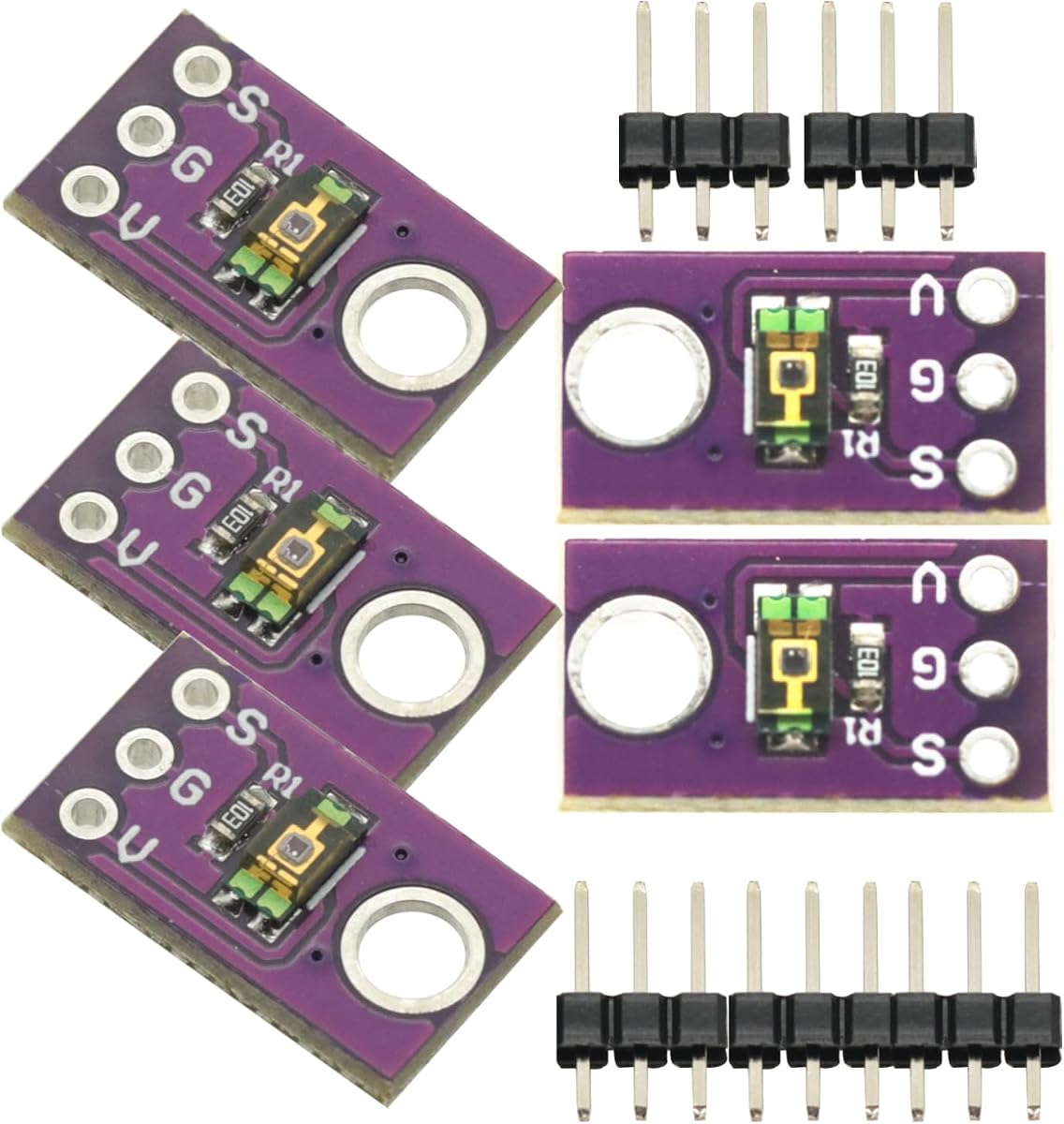
The TEMT6000 is a specialized phototransistor designed for professional ambient light detection in industrial and consumer electronics. It has achieved a perfect rating due to its reliability in display backlighting and lighting control systems.
We may earn a commission when you buy through this link, at no additional cost to you.
Its spectral response is tuned to match human eye sensitivity which makes it excellent for dimming screens based on environmental light. This feature is particularly useful for battery powered devices where conserving energy is a priority.
Although it comes in a pack of five which is fewer than some bulk options, the quality of each unit is consistent. The focus on specific industrial applications means it might be overkill for simple hobby projects but it is unmatched for professional use.
This sensor is best suited for developers working on consumer electronics or industrial automation where precision and longevity are key. It delivers superior performance in environments where standard photoresistors fail to provide accurate data.
The spectral response is calibrated to mimic human vision ensuring accurate adjustments for displays and lighting systems.
Built for harsh environments this module offers stable performance under varying temperatures and voltage conditions.
We may earn a commission when you buy through this link, at no additional cost to you.
This pack provides thirty individual photoresistors making it an economical choice for those building multiple projects or needing spares. It maintains a high rating for value and ease of use in basic light detection circuits.
We may earn a commission when you buy through this link, at no additional cost to you.
Each unit is a 5mm GM5539 resistor which is a standard component in electronics. You can use them to build your own voltage divider circuit to interface with analog inputs on any microcontroller board.
The main trade-off is that they do not come on a breakout board so you must provide your own voltage supply and read the voltage yourself. This requires a bit more electronics knowledge but offers complete flexibility in design.
This product is perfect for beginners learning how sensors work or for makers who need many units for a large installation. It offers the most affordable entry point into light sensing technology available on the market.
Buying in bulk significantly reduces the cost per unit allowing for extensive prototyping without budget constraints.
The bare component format allows you to integrate it into custom circuits exactly how your design requires.
We may earn a commission when you buy through this link, at no additional cost to you.
This sensor module combines a photoresistor with a voltage comparator to offer both digital and analog outputs. It is designed for easy integration with microcontrollers and provides a straightforward way to detect ambient light.
We may earn a commission when you buy through this link, at no additional cost to you.
The LM393 comparator ensures that the digital signal is clean and stable which is vital for triggering actions like turning on an LED. The potentiometer allows you to physically adjust the sensitivity without writing code.
While the pack contains only six units it provides a good balance between cost and convenience. The 3.3 to 5V operating range makes it compatible with modern microcontrollers that use lower voltage logic.
This module is a strong choice for those who want a plug and play solution without building custom circuits. It is versatile enough for home automation projects and educational kits.
You can choose between a raw analog signal or a clean digital switch depending on your specific project needs.
The built-in potentiometer allows you to tune the trigger point manually to suit your specific environment.
We may earn a commission when you buy through this link, at no additional cost to you.
The Teyleten Robot module offers a robust set of ten boards which is useful for projects requiring multiple sensors. It uses an LM393 comparator to provide reliable digital output directly from the sensor.
We may earn a commission when you buy through this link, at no additional cost to you.
You can adjust the detection threshold using the potentiometer on the board which makes setup very intuitive. The output is capable of driving relay modules directly making it suitable for controlling AC devices.
While the board design is basic it is functional and gets the job done for most hobby projects. The price per module in this pack is quite competitive compared to single unit purchases.
This product is ideal for classroom settings or large scale deployments where you need many sensors. It simplifies the process of adding light detection to multiple points in a system.
The output signal is strong enough to trigger external relays which is great for lighting or fan control.
Getting ten units at once ensures you have backups and enough sensors for large projects.
We may earn a commission when you buy through this link, at no additional cost to you.
This product offers fifty GL5516 photoresistors making it one of the most generous bulk packs available. It has an excellent rating due to the consistent quality of the resistors in the batch.
We may earn a commission when you buy through this link, at no additional cost to you.
The resistance values are well documented which helps in calculating the necessary series resistors for your circuit. This makes it perfect for solar tracking projects where you might need multiple sensors for calibration.
While it does not include breakout boards the resistors are standard and easy to use with a breadboard. The low cost per unit allows you to experiment freely without worrying about wasting components.
If you need a large number of light sensors for a grid or array this is the best value option. It simplifies inventory management by providing everything you need in one package.
The predictable resistance in light and dark conditions makes circuit calculation straightforward and reliable.
With fifty units you get a very low price per sensor which is ideal for large installations.
We may earn a commission when you buy through this link, at no additional cost to you.
This four piece pack is designed for a wide range of microcontrollers including the popular ESP32 and Raspberry Pi. It offers both digital and analog outputs to provide flexibility in how you read light levels.
We may earn a commission when you buy through this link, at no additional cost to you.
The included tutorials are a significant benefit for beginners who are new to sensor interfacing. You can quickly get started with code examples that show how to read the values and trigger actions.
The adjustable potentiometer lets you set the trigger point easily on the board itself. This is convenient for testing different thresholds without changing code every time.
This is a solid choice for those who need a quick start kit with clear documentation. It is great for prototypes and small projects where you need four sensors ready to use.
Tutorials are included to help you understand how to connect and code the sensor for your first project.
Compatible with many different microcontrollers you can use it across your entire electronics hobby.
We may earn a commission when you buy through this link, at no additional cost to you.
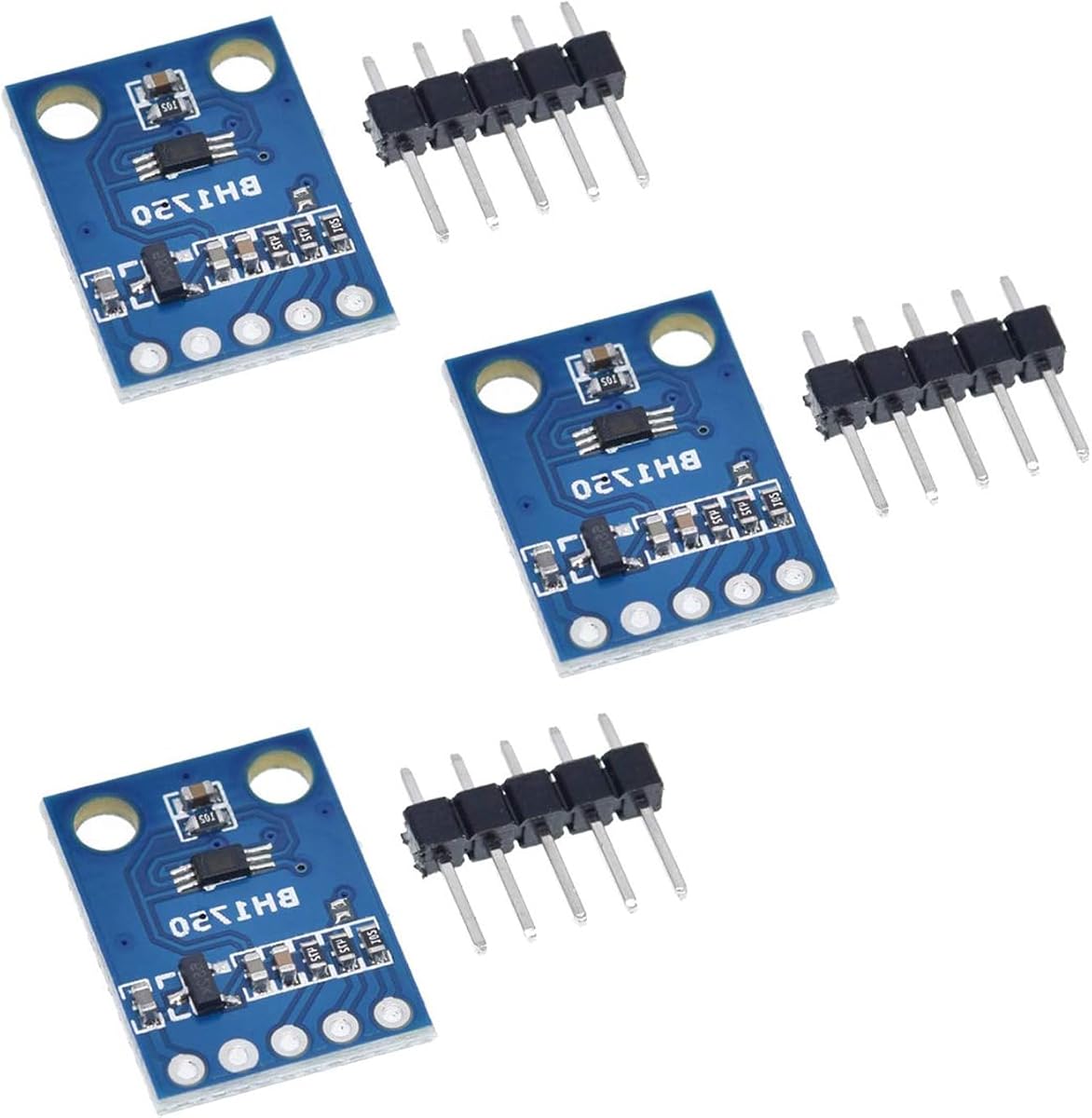
This three pack features the GY-302 module which is known for its accuracy in measuring light intensity. It uses the BH1750FVI chip to provide precise digital lux values directly.
We may earn a commission when you buy through this link, at no additional cost to you.
The compact size of 13.9mm x 18.5mm makes it ideal for space constrained applications. It is small enough to fit into wearable projects or inside enclosures without adding bulk.
While it only comes with three units they are of high quality and consistent. This makes it a good option if you need just a few sensors for a specific task rather than a bulk build.
Choose this if you prioritize accuracy and size over quantity. It is perfect for projects where the sensor needs to be hidden or integrated into a small device.
The digital output removes noise from the analog signal ensuring you get a true reading of light intensity.
Its small board size allows it to be used in tight spaces where larger modules would not fit.
We may earn a commission when you buy through this link, at no additional cost to you.
This module is designed to detect light from a specific direction which is useful for line tracking or specific light source detection. It includes fixing bolt holes to make mounting on a chassis simple.
We may earn a commission when you buy through this link, at no additional cost to you.
With ten units you have plenty of sensors for creating arrays or replacements. The sensitivity is adjustable via a potentiometer which allows you to calibrate each module individually.
The directional nature means it is less effective for ambient light measurement but great for object detection. This distinction is important when selecting the right sensor for your application.
This is a great choice for robotics or automation projects where light direction matters. It simplifies the build by including mounting hardware on the board itself.
It only senses light directly in front which reduces noise from ambient sources in the environment.
The included bolt holes allow you to secure the sensor to a robot or device without extra brackets.
We may earn a commission when you buy through this link, at no additional cost to you.
This module is designed with automotive applications in mind offering stability in varying voltage conditions. It uses an LM393 comparator to ensure clean digital signals for reliable detection.
We may earn a commission when you buy through this link, at no additional cost to you.
It provides both digital and analog outputs giving you flexibility in how you process the data. The wide voltage range makes it suitable for use with automotive batteries which can fluctuate.
With three pieces it is a small pack but sufficient for testing or simple dual sensor setups. It is a practical option for smart car projects or light following robots.
This module is a solid choice for those looking to build light responsive vehicle projects. It offers reliability and versatility in a compact and affordable package.
The wide voltage range and stable comparator ensure it works well in environments with power fluctuations.
You can use the digital output for switches or analog for fine tuned control in your project.
We may earn a commission when you buy through this link, at no additional cost to you.
Choosing the right light sensor requires understanding the difference between analog and digital modules and how they integrate with your specific microcontroller setup.
Light sensors generally fall into two categories photoresistors and digital modules. Photoresistors are simple components that change resistance based on light but require an analog pin. Digital modules often include a comparator or dedicated chip to output a direct signal.
Decide whether you need a simple analog component or a sophisticated digital module based on your coding comfort and pin availability.
Ensure the sensor supports the logic voltage of your microcontroller. Many boards use 5V while others like ESP8266 or ESP32 use 3.3V. A compatible voltage range prevents damage to your components.
Look for modules explicitly stating 3.3V to 5V support to ensure safe operation across different boards.
Digital sensors provide a clean on or off signal which is great for simple switches. Analog sensors give a continuous value that allows for more nuanced control like dimming.
Choose digital for simple alarms and analog for applications requiring brightness levels or dimming.
Many modules include a potentiometer to adjust the threshold. This allows you to tune the sensor to your environment without changing code.
Prioritize modules with physical adjustment knobs if you expect lighting conditions to vary.
Some products come in bulk packs while others sell single units. If you are building multiple projects a bulk pack saves money.
Consider your future needs and buy a pack size that matches your project scale.
For general light detection any basic module works. For precise lux measurements you need a digital module with a specific chip like the BH1750.
Select a digital chip module if precise data reporting is required.
Some sensors have holes for bolts making them easy to secure to a device. Others are just bare boards that rely on soldering or tape.
Check for mounting holes if you plan to install the sensor in a permanent location.
Modules with tutorials or clear diagrams help beginners get started quickly. Lack of documentation can slow down your project significantly.
Look for products that include links to guides or code examples.
Connect the VCC pin to your microcontroller's 5V or 3.3V output and the GND pin to ground. Then connect the output pin to a digital or analog input depending on the module type.
Calibrate your sensor by adjusting the potentiometer until the digital output switches at your desired light level. Use a multimeter to measure the voltage if needed.
Keep the sensor away from direct heat sources to avoid drift in readings. Ensure the lens is clean from dust for accurate light detection.
A photoresistor changes its resistance based on light levels while a photodiode generates a current. Photoresistors are easier to use for beginners while photodiodes offer faster response times.
Not necessarily. You can use an analog input on your microcontroller to read the voltage divider directly. However a comparator helps if you want a clean digital signal.
Yes most of the modules listed support 3.3V logic which is standard for ESP32. Always check the voltage range before connecting to avoid damage.
Use a digital module with a calibrated chip like BH1750. These convert the raw signal into lux values which are standardized for ambient light measurement.
Fluctuations can happen due to unstable power or noise. Ensure you have a clean power supply and add a capacitor near the VCC pin to smooth the voltage.
Most are not water resistant by default. If you plan to use them outdoors you will need to place them in an enclosure or use a specific outdoor rated sensor.
These sensors detect visible light and are not designed for infrared. For night vision you would need an infrared sensor or a camera module.
Photoresistors have a slower response time which might miss rapid changes. Photodiodes and digital modules generally offer faster response times for real-time detection.
We have reviewed ten excellent options ranging from simple photoresistors to advanced digital modules. The HiLetgo GY-302 stands out for accuracy while the EBOOT pack offers the best value.
When choosing prioritize the features that match your project needs such as accuracy or cost. A digital module is better for precise tasks while a basic resistor is great for learning.
Always verify current availability and pricing before making your final purchase. Light sensors are essential components for automation and choosing the right one ensures success.